Devcon 8 India: Onchain Games Hub
Topic: Building and playing onchain games as a live testbed for Ethereum’s core properties
Submitted by: Shubham Shakti | Telegram @0x_myst3ry | Gmail: shubhamshakti137@gmail.com | thatcommunityguy.bio.link
Summary of Proposal
A working game studio and arcade in one room. Over four days we build one onchain game in public from scratch, while the arcade runs playable games all day. The games make censorship-resistance, privacy and security - something you can feel!
Motivation and Rationale
Why games, for a Devcon about going back to the roots.
CROPS is easy to agree with and hard to feel. A game makes each property physical within about ninety seconds of play:
- Censorship resistance - your character lives on a chain nobody can delete it from. We demonstrate this by pulling the network mid-tournament and carrying on.
- Open source - a game world is forkable. Everything we make is MIT-licensed and public before the venue closes.
- Privacy - hidden information is the oldest mechanic in games and one of the hardest problems in cryptography. Fog of war and commit–reveal teach a ZK primitive faster than any slide.
- Security - game state is adversarial state. Randomness manipulation, front-running, griefing and reentrancy are not hypotheticals in a game; they are how you lose.
This hub lies at the sweet spot where a real application is built with the community in the room, over four days.
How it enhances the attendee experience.
While some attendees may feel “talk-saturated” on the initial days, this hub will create a refreshing room where the energy goes up rather than down. Plus, this is also the easiest place at Devcon to start a conversation with a stranger either by teaming up with them or playing against them!
How it complements Devcon 8.
Onchain gaming isn’t new to the world of Devcon. Devcon 7 SEA hosted the MUD and Autonomous Worlds session with 0xPARC and Lattice (which were the talks about games). What has never existed is a persistent space where a game is built in public and played the same week!
The onchain gaming has already been one of the popular narratives in web3, and honestly, games are a proven effective medium to onboard more people to new technology than any other.
Why a hub rather than a talk or workshop.
- Our goal of going from empty repository to an onchain game needs continuous floor time across four days (it cannot be compressed).
- A game is only real when it is played, and building the game live will make it exciting for the developers or the game enthusiasts to shape the outcomes.
- This has a potential to offer much valuable conversations, collaborations and learning experience (whether the attendees see the game being built live, play onchain games themselves or try the games built by the EVM devs).
How it supports builders.
-
It collapses the distance between an idea and a deployed artifact, and shows by demonstration what a small team with modern tooling can ship in four days.
-
It teaches Ethereum’s hardest problems, such as adversarial state, randomness, latency, griefing in a setting where failure is funny rather than expensive.
-
And it is a talent bridge: India has one of the world’s largest game-development talent pools and almost none of it has touched Ethereum. This hub is a physical interface between those two populations.
Have you organised a Community Hub at a past Devcon?
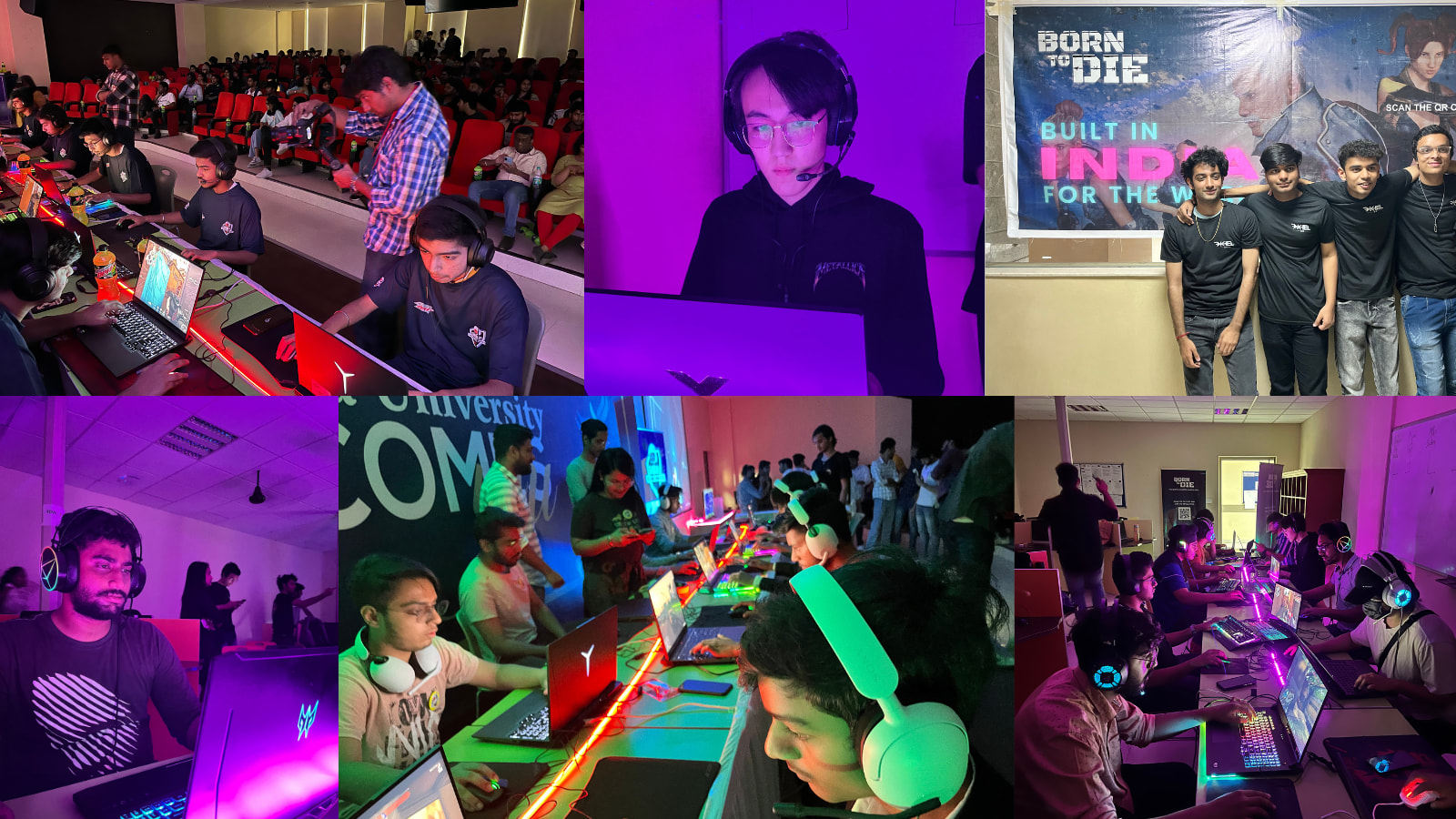
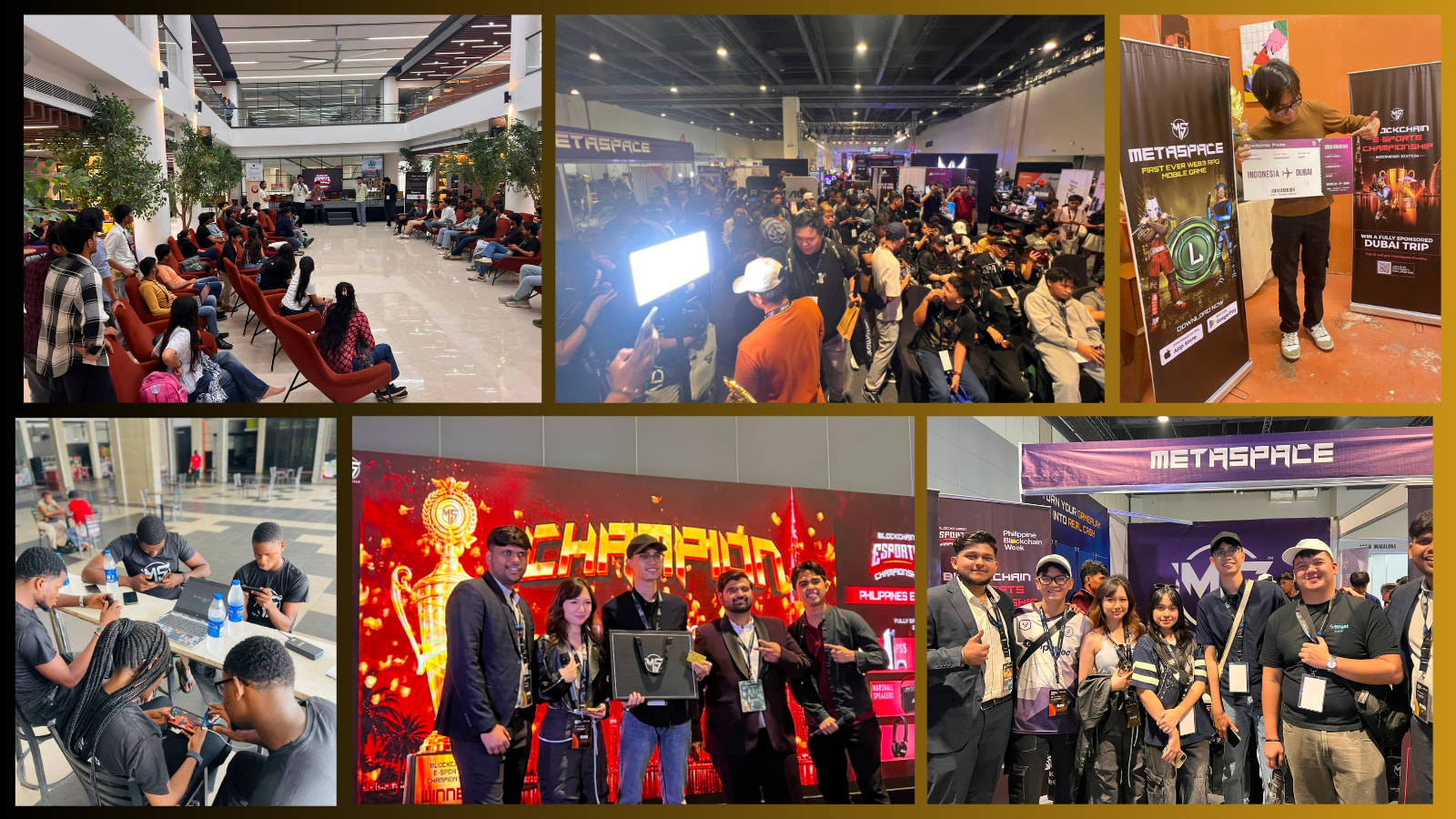
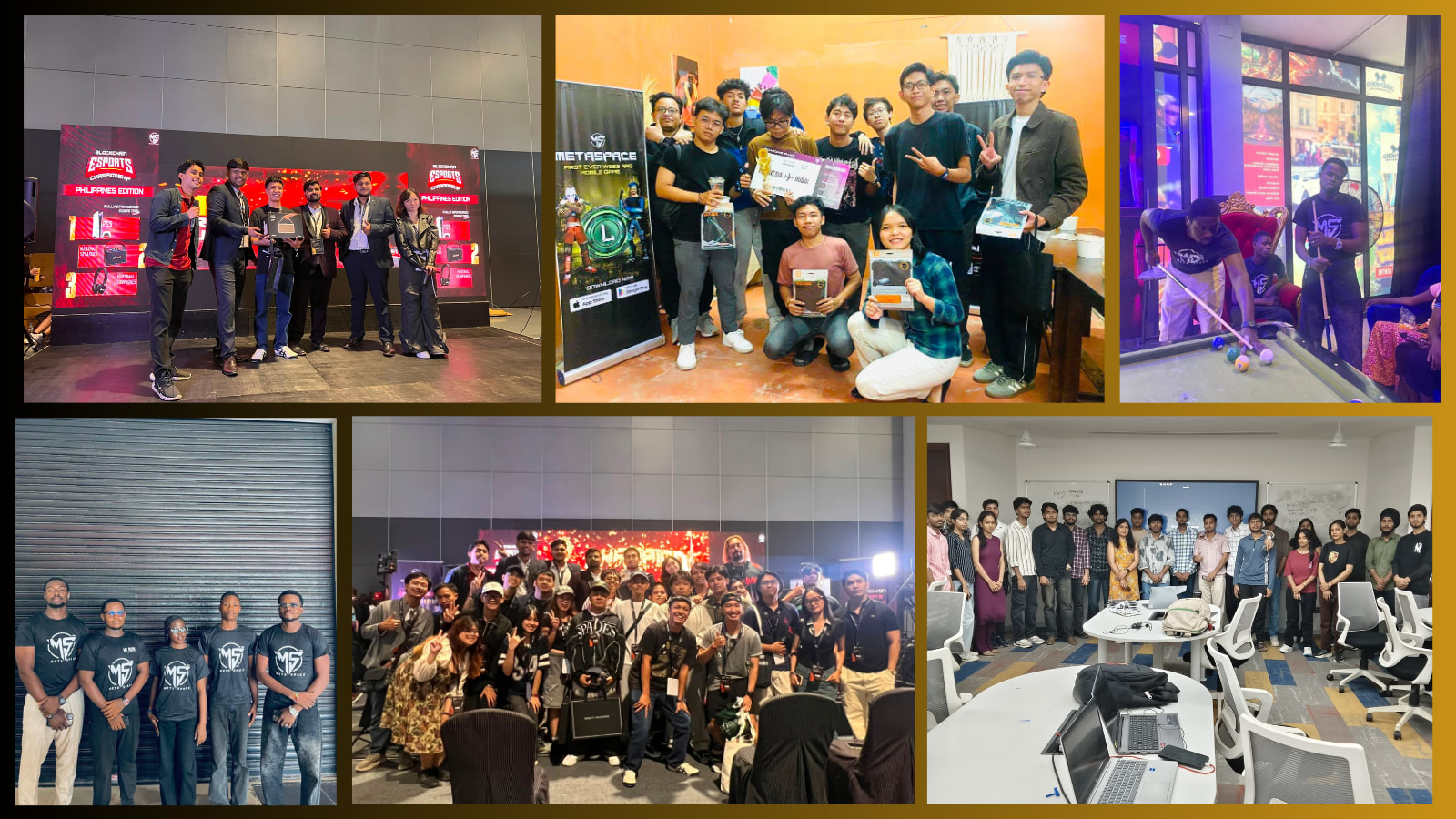
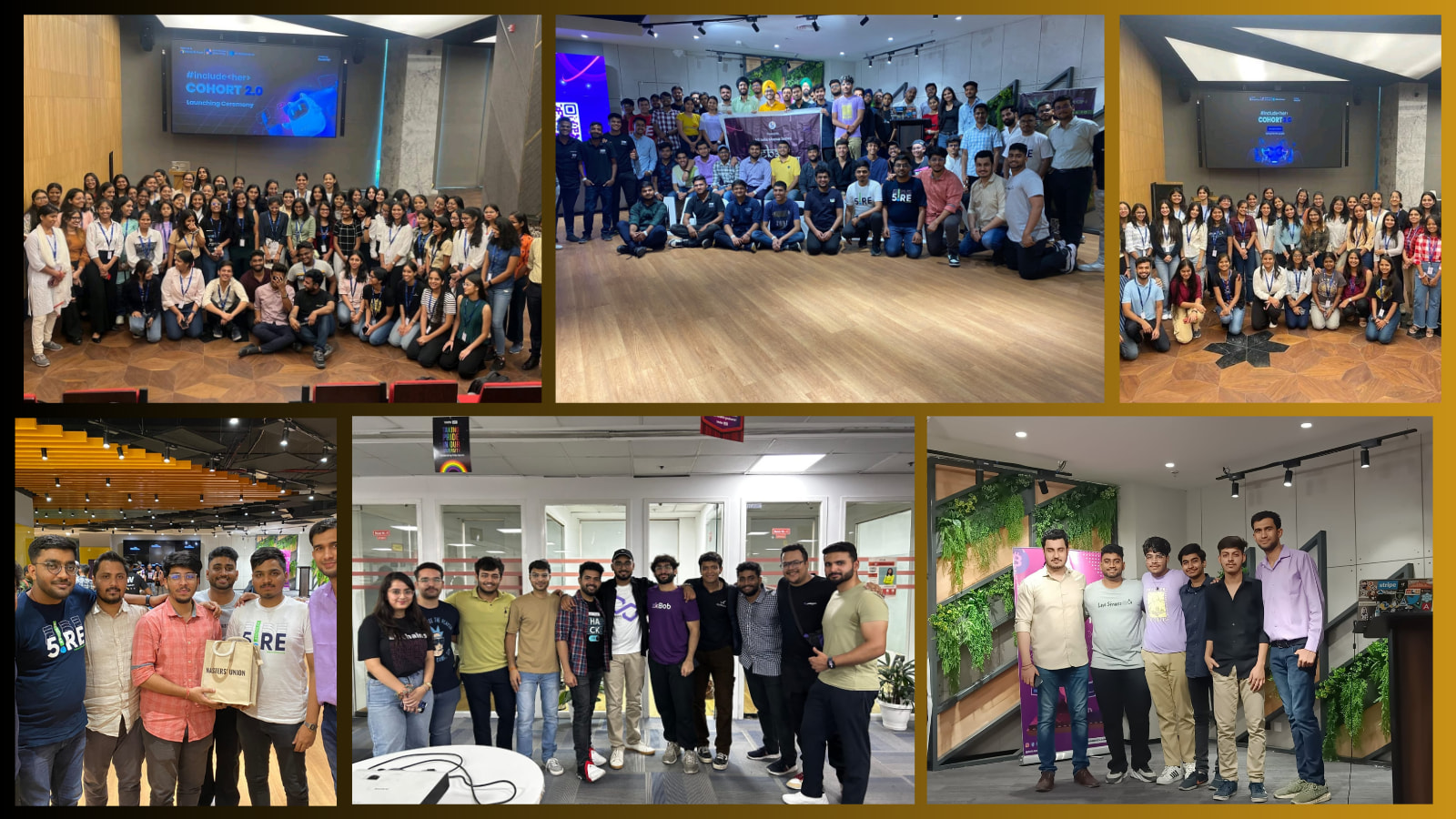
This is our first Devcon Community Hub, and we have a good history in organizing such events in the past. The organizing team has run Web3 Sangam across more than 40 Indian cities, produced over 200 events globally (on web3 education, gaming, blockchain development) and led activations across 15+ countries.
Implementation
The standard hub kit, that consists of LED TV with HDMI, seating for around ten, two whiteboards, two cork boards, a worktable for six, power outlets, cabinet, and the Ethernet line covers most of what we need. The provided TV will be utilized as our build wall where we will show the live game development and tournament bracket all day.
Sized for roughly 48m² and thirty people, we source the rest ourselves:
| Item | Purpose |
|---|---|
| One second display, self-sourced | The provided TV is the build wall and stays on the build wall all four days. A second screen carries the arcade, the tournament bracket and the finals, so the two never compete. We bring and mount it ourselves |
| 4–6 laptops or mini-PCs, 8–10 controllers | Play stations on and around the worktable. Controller-first and couch co-op by default 10 bean bags and the arcade. Onchain games that support gamepads and local multiplayer get priority in the open call, because two strangers on a sofa passing controllers is the social unit we are designing for |
| Wired headphones at every station | A gaming hub next to a discussion hub is a real problem. We solve it upfront: headphones by default, no open speakers |
| Our own router and local chain node | A 20/20 Mbps line cannot carry a tournament. Everything runs on a local network against a local devnet, syncing to a public testnet when convenient. This is not a workaround, it is the censorship-resistance demo |
| Power strips, cable management, two spare machines | Fifteen percent hardware failure over four days is the realistic assumption |
| One compact arcade cabinet (nice-to-have) | Built in Mumbai pre-event with a local maker space. Depends on space, floor loading, and whether the shared storage space can take it overnight |
| Sticky notes, markers, sketch supplies | For brainstorming and visual prototyping |
No special production requirements beyond the standard kit are essential. Everything above is ours to bring, and the hub degrades gracefully without the cabinet.
We commit to staffing 09:00–18:00 across all four days on a rotating roster, being present for setup on 2 November, attending all onboarding calls, and producing an original hub logo.
Programming
The spine: one game, four days, in public
Day 1, 09:30 → an empty repo goes on the wall.
Day 4, 16:00 → it is deployed, open-source, and being played in a final.
The game is chosen by attendee vote on Day 1 from a shortlist crowdsourced on this forum beforehand. Here are the 3 seed concepts in the voting:
- Chakravyuh → a co-operative maze and formation game after the Mahabharata’s rotating battle array. Players deploy strategy contracts instead of clicking. The world is forkable.
- Gully Cricket Onchain → turn-based street cricket using commit–reveal, so bowler and batter choose simultaneously without trusting each other. It teaches a cryptographic primitive in one over.
- Mempool Mayhem → an arena where the block is the game tick and transaction ordering is the entire strategy.
A rotating pit crew of 3-4 will lead the game development, with one seat always open to whoever walks up (with a contribution path available for them at any skill level).
→ The builder crew takes prompts from the room. Anyone in the hub can put a prompt into the build queue and prompts get pulled live, run against the agent on the build wall, and either land in the game or visibly fail in front of everyone. The queue will be public and projected.
→ People would be fascinated to see a stranger’s one-line suggestion become a playable mechanic in a couple of minutes.
→ This format will create a genuine feeling of belongingness among the attendees while positioning the build failures as the learning lessons.
Sample program, 09:00–18:00, all four days
The arcade is open and playable throughout; the schedule below is the structured layer on top of it. Roughly 60% programmed and 40% open floor, and the open time is deliberate.
Day 1 → Open the doors
| 09:00 | Doors, open play, chai. Onboarding for first-timers |
| 09:30 | Repo Zero - the empty repo of the game goes on the wall |
| 10:00 | Kick-off beings with a Roundtable: why is onchain gaming still hard? |
| 11:00 | Audience Voting - attendees will pick the game & the crew will design sprint on the whiteboards |
| 12:00 | Game Building ~ Block 1. Public prompt queue opens here |
| 13:00 | Open floor for discussions and networking, lunch |
| 14:00 | Hands-on Workshop: your first onchain game in ninety minutes. for beginners |
| 15:30 | Game Building ~ Block 2 + 3-4 lightning demos from indie developers |
| 16:30 | Day 1 arcade tournament, commentated |
| 17:15 | Game Building recap + Open floor until 18:00 |
Day 2 → Make it real
| 09:00 | Doors, open play |
| 09:30 | Build standup, open to all |
| 10:00 | Technical Talk: provable randomness, and how not to get your game exploited |
| 11:00 | “Roundtable: India Plays” consisting of Indian game developers and Ethereum builders in conversation. |
| 12:00 | Hands-on Workshop: hidden information - fog of war, commit–reveal, ZK in games |
| 13:00 | Open floor, lunch |
| 14:00 | Speedrun Jam - a three-hour team jam, any stack |
| 15:00 | First playable build of our game enters the arcade |
| 16:00 | Postmortem: a game that died. An honest failure talk |
| 16:30 | Day 2 tournament, then jam demos and recap |
Day 3 → Break it
| 09:00 | Doors, open play |
| 09:30 | Build standup |
| 10:00 | Break Our Game - an open adversarial session on the live build. Griefers welcome + findings will be fixed live |
| 11:00 | Talk: agents as players - AI opponents in an open world |
| 12:00 | Workshop: designing for adversarial players. Whiteboards only, no code |
| 13:00 | Open floor, lunch |
| 14:00 | Localisation Sprint - translating the game UI into Hindi, Marathi, Tamil, Telugu, Bengali and beyond. No coding required; every translator will be credited in the repo |
| 15:30 | Build: polish, sprites, sound - artists welcome. Open mic, three-minute pitches |
| 16:30 | Day 3 tournament, then recap and Day 4 plan |
Day 4 → Ship it
| 09:00 | Doors, open play |
| 09:30 | Deploy checklist goes on the wall |
| 10:00 | The deploy, live |
| 10:30 | Honest Talk: what four days of building in public actually taught us |
| 11:00 | Open contribution hours - first external pull requests merged live |
| 12:00 | Roundtable: what onchain gaming needs from Ethereum in 2027. |
| 13:00 | Open floor, lunch |
| 14:00 | Fork session - how to take this repo and run it in your city |
| 16:00 | Final tournament on the game we built, contributor roll call, open floor until 18:00 |
Support for core properties, open source and bridge-building
The core properties are demonstrated rather than described - please see the four points opening this proposal.
Open source is non-negotiable, since the game, tooling, workshop material, cabinet build plans and a written retrospective are all permissively licensed and published before the closing keynote, and featured arcade games must be open source or open-core to qualify.
Bridge-building runs in three directions:
→ Traditional game developers into Ethereum, and India is where the largest untapped concentration of them will be in one building.
→ Bringing the application builders closer to protocol people.
→ Welcoming the newcomers into the ecosystem.
Audience
Primary. Game developers, Devcon builders who want to see their infrastructure stress-tested by something with real players. Indian students and first-time attendees.
Secondary. Creative artists, researchers and any Devcon attendee who is tired and wants to attend something exciting and refreshing.
Particularly want to reach. – Indian university game-dev and blockchain clubs, engaged before Devcon. Developers from tier-2 and tier-3 Indian cities. Women and non-binary developers in gaming (with a speaker-diversity bar we publish and hold ourselves to).
On the India question: – Our past initiative Web3 Sangam has run awareness and onboarding events across more than 40 Indian cities, largely in tier-2 and tier-3 India, and Devaarambh works on the Indian AI developer ecosystem. That network built over years of hard-work & resilience is something we will bring to this hub! Concretely, before November we will run pre-Devcon game jams and workshops with Indian university game-dev and blockchain clubs through the Web3 Sangam and Devaarambh networks, so that the contributor pipeline exists weeks before.
Team
Six organisers, each accountable for a named part of the hub across all four days.
| Role | Name | Background |
|---|---|---|
| Hub Lead - single point of accountability, community programming | Shubham Shakti | Founder, Ekhel. Advisory DevRel, ID8Devhub. Organised Web3 Sangam across 40+ Indian cities, bringing Web3 awareness to tier-2 and tier-3 India |
| Build Lead - runs the live game build | Akshay Prabhat Mishra | Game developer and full-stack developer at Mages Studio. 2x Azure and 1x GCP certified. A builder who has actually shipped games |
| Programming & Tournaments Lead - sessions, speakers, brackets, casting | Harsh Gupta | Global Events Head, Metaspace. Six years across AI, Web3 and gaming; has led Web3 programming in 15+ countries |
| Adversarial Track Lead - Break Our Game, security programming | Atharv Tiwari | COO, Nevis Infosystems. AI security strategist and cybercrime researcher |
| Operations & Production Lead - hardware, vendors, setup day, rosters | Prasan Singh | Ventures and community across APAC. Previously co-founder, Arweave India. 200+ events produced globally. C|EH v11, SC-200, SC-900 |
| Onboarding & Developer Ecosystem Lead - newcomers, workshops, AI tooling | Sarthak Jain | Founder, Devaarambh. Microsoft MVP. Builds the AI developer ecosystem in India |
Regulatory neutrality, specific to India
India’s Promotion and Regulation of Online Gaming Act, 2025 prohibits online money games in all forms, chance, skill or hybrid along with their advertising and related financial transactions, while explicitly recognising and promoting esports and online social games. This hub sits unambiguously in the protected category by design:
- No wagering, staking, betting or entry fees, in any format, at any station
- No monetary or token prizes. Prizes are hardware, books, mentorship, a trophy and the leaderboard
- No featured game requires a purchase, deposit or token to play, it is already already an open-call criterion
- No promotion of real-money gaming platforms on the floor or in programming
We will confirm this framing with the Devcon team during onboarding, and are glad to share it with any other hub or side event that touches games.
Community connection
As shared above, our team members bring the connects across India’s Ethereum and open-source community, gaming communities as well as security communities globally.
Languages
English and Hindi across the whole organising team. We aim to recruit more volunteers who may wear their languages on their badges so that a nervous first-timer can find someone to talk to at a glance. Also, the Day 3 Localisation Sprint is the most accessible contribution slot in the hub!
Working with the other hubs
We would also like to build stronger bridges with other hubs, hence we also have a room for collaboration in (& not limited to) the following areas:
- Bhasha CROPS Hub ➝ collaboration to co-run our Day 3 Localisation Sprint.
- Agentic Hub ➝ collaboration to put AI agents into our game as players, with a cross-hub agent tournament on Day 4.
- Security Hub ➝ bring their people to Break Our Game.
- Onchain Art Hub ➝ our game needs sprites, sound and a visual identity; their artists get somewhere to ship work that is played the same week.
Open call for contributors
If you build onchain games, run tournaments, teach game development, organise an developer community meeups, or simply want to help keep a room alive for four days, reply here or reach us on Telegram at @0x_myst3ry. We are especially looking for onchain game devs, gaming enthusiasts and anyone who would love to contribute.
