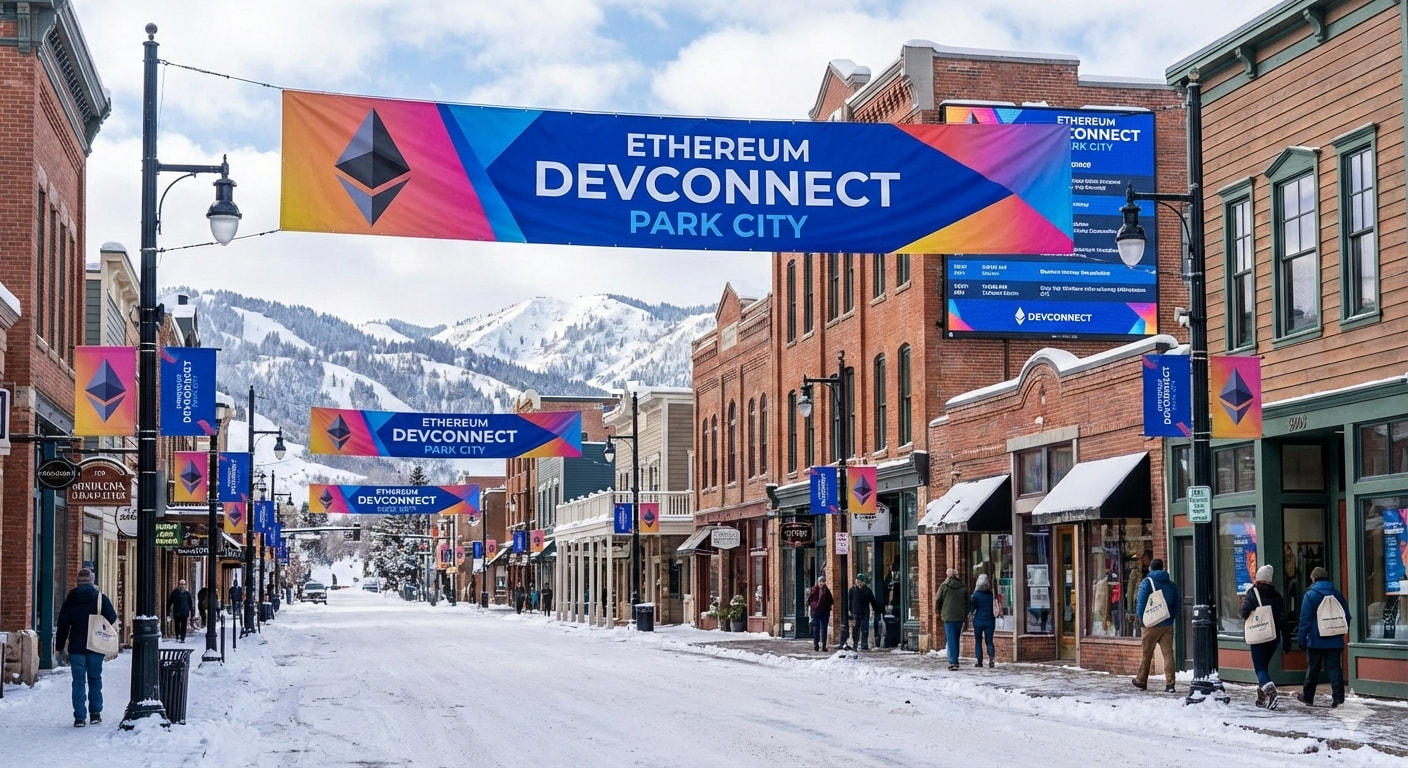
Proposed Location (Devconnect): Park City, Utah, USA 
Park City is a globally recognized mountain community with four decades of proven infrastructure for hosting distributed, multi-venue international events. From 1981 through 2026, it served as the home of the Sundance Film Festival, where thousands of international visitors attended dozens of independently organized events across the town simultaneously. With Sundance’s departure to Boulder, Colorado in 2027, Park City has world-class distributed event infrastructure actively seeking its next anchor.
Devconnect’s multi-venue, community-driven format is structurally identical to the festival model Park City refined over 40 years. This is not a Devcon proposal. Park City cannot host 15,000 people in a single venue. But for a Devconnect event focusing on a large number of smaller gatherings distributed across dozens of independent events, it may be one of the best-prepared small cities in the world.
Country and Entry
What are the visa restrictions for the country?
Standard U.S. entry: most attendees will use B-1 (business visitor) or Visa Waiver Program (VWP/ESTA) where eligible. Conference attendance is explicitly permitted as “temporary business” activity. The Devcon team has extensive experience navigating U.S. visa logistics from prior events.
How easy is the international access?
Salt Lake City International Airport (SLC) is a major Delta Air Lines hub with direct flights from Amsterdam, Paris, London, Tokyo-Narita, and dozens of major domestic cities. SLC completed a $5.1 billion terminal rebuild in recent years and is consistently rated among the best U.S. airports for on-time performance.
Park City is approximately 32 miles (50 km) from SLC, connected by I-80 through Parley’s Canyon. Transit time is 35-45 minutes. The PC-SLC Connect bus service and private shuttle operators provide regular scheduled service between the airport and Park City. Rideshare is also readily available for this corridor.
What about the safety and political stability of the region?
The United States is politically stable with mature event operations and emergency services infrastructure. Park City has specific experience managing large-scale international events: the 2002 Winter Olympics (Park City hosted multiple medal events at Utah Olympic Park and Deer Valley), 40+ years of the Sundance Film Festival, and regular FIS World Cup ski racing events.
During peak Sundance weeks, Park City managed visitor populations exceeding 70,000 without major incident. The town maintains its own police department with mutual aid agreements with Summit County services.
How expensive are venue rentals, accommodation, food, and transport?
Park City is a resort town and accommodation costs are higher than typical conference destinations. Average hotel rates during shoulder season (October-November, before ski season fully opens) range from $200-$500/night depending on property class. However, the abundance of vacation rental inventory (condos, townhomes, and houses via VRBO, Airbnb, and local property management companies) can significantly reduce per-person costs when attendees share accommodations. This is exactly the model Sundance attendees have used for decades.
Dining ranges from casual ($15-25 per meal) to resort fine dining. Park City’s restaurant scene is extensive for its size, a direct result of serving festival audiences for 40 years.
Local transit within Park City is free. The Park City Transit system operates year-round with no fares, connecting all major areas of town, the resort bases, and Kimball Junction.
When is the climate the best?
Park City sits at approximately 7,000 feet (2,134m) elevation. October offers the best conditions: daytime highs around 50-60°F (10-15°C), cool nights, minimal precipitation, and fall colors throughout the Wasatch Range. By mid-November, temperatures drop further and meaningful snow probability increases.
Altitude note: Attendees arriving from sea level should allow 24-48 hours for acclimation to the 7,000-foot elevation. Mild effects (fatigue, headache, shortness of breath during exertion) are common. Devconnect’s naturally distributed schedule, with walking time between venues and breaks between sessions, actually assists with acclimation. Event planning should prioritize hydration stations and clear altitude guidance for attendees.
City and Venue
How easy is the transportation in the city?
Park City’s free public transit is a genuine differentiator. The Park City Transit system runs frequent routes connecting all major areas:
-
Historic Main Street (the core venue corridor)
-
Park City Mountain Resort base area and Canyons Village
-
Deer Valley Resort base area
-
Kimball Junction (hotels, restaurants, the Newpark area)
-
Prospector neighborhood and residential areas
During recent Sundance festivals, the town pedestrianized Main Street and operated expanded shuttle routes, a change that was very well received. A similar approach for Devconnect would create a walkable core event corridor.
Are there modern venues?
Park City’s venue ecosystem was shaped by four decades of Sundance operations. The town has extensive experience hosting distributed events across multiple simultaneous venues with professional production support. Key venue nodes include:
Historic Main Street Corridor:
-
Eccles Center for the Performing Arts (~1,200 seats), Sundance’s anchor venue for 25+ years
-
Egyptian Theatre (~300 seats)
-
Jim Santy Auditorium at the Park City Library (~300 capacity)
-
Multiple galleries, restaurants, and event spaces along Main Street with 50-200 person capacity, many with established AV infrastructure from festival use
Canyons Village at Park City Mountain:
-
Conference and ballroom spaces at resort properties
-
Hyatt Centric Park City (meeting space and ~170 rooms)
-
Pendry Park City (conference facilities)
-
Established satellite venue spaces used during Sundance
Deer Valley Resort Area:
-
Montage Deer Valley (9,500+ sq ft event space)
-
St. Regis Deer Valley (event and conference facilities)
-
Stein Eriksen Lodge (multiple event spaces)
-
Snow Park Lodge and Silver Lake Lodge (base area facilities with large-format capacity)
Kimball Junction / Newpark:
-
Newpark Resort & Conference Center (6,500 sq ft indoor meeting space, 75,000 sq ft outdoor)
-
DoubleTree by Hilton / The Yarrow (11,000+ sq ft meeting space, served as a Sundance venue)
-
Utah Olympic Park (meeting spaces and a unique setting for special events or opening ceremonies)
Network infrastructure: As with any Devconnect venue deployment, dedicated temporary network infrastructure would need to be stood up at primary venues. Park City’s resort properties provide a reasonable baseline, but high-density concurrent device support for developer audiences requires the standard event NOC approach.
Are there venues with the capacity to host between 5-10k+ people?
No single venue in Park City accommodates that scale. The Eccles Center at approximately 1,200 seats is the largest enclosed event space. This is explicitly why this is a Devconnect proposal.
Devconnect’s model distributes attendees across many independent events running in parallel. Park City’s venue ecosystem supports a core attendance of 5,000-8,000 across dozens of simultaneous sessions. Additional community-organized side events could extend into the Salt Lake City metro area, 35 minutes away, following the same model Sundance used in its final years when it incorporated SLC venues such as the Rose Wagner Performing Arts Center. This combined Park City + Salt Lake corridor model is well-tested.
For any large-format gathering such as an opening or closing event, the outdoor spaces at the resort base areas or Utah Olympic Park provide options in favorable weather. Multi-venue simulcast with synchronized streaming is a well-practiced capability among Park City’s production crews.
What are attractions in or around the city?
-
Two world-class ski resorts: Park City Mountain (the largest ski resort in the U.S.) and Deer Valley Resort, both accessible via free local transit
-
Utah Olympic Park: Home of 2002 Winter Olympics events, featuring ski jumping, bobsled/luge, a museum, and event/meeting facilities
-
Historic Main Street: A walkable corridor of 100+ restaurants, bars, galleries, and shops built into a preserved 19th-century silver mining town
-
High West Distillery: World’s first ski-in distillery, a Park City institution well suited for community dinners and receptions
-
Outdoor recreation: Hiking, mountain biking, fly fishing on the Provo and Weber Rivers, trail running (season dependent)
-
Woodward Park City: Action sports facility (skateboarding, BMX, trampolines)
-
Proximity to Salt Lake City: 35 minutes by car opens up a full metro area of dining, nightlife, museums, and cultural venues
Ethereum Community and Impact
How does the Ethereum community look like in this region?
Park City itself is a small town (~8,400 residents), but it sits at the top of Utah’s Silicon Slopes technology corridor, which extends from Salt Lake City through Provo along the Wasatch Front. This ecosystem includes:
-
Over 1,000 technology companies, with major facilities from Adobe, Oracle, Microsoft, Qualtrics, and Domo
-
Crypto-native companies including TaxBit (crypto tax compliance, SLC area) and Overstock.com (early Bitcoin adopter, SLC-based)
-
Active blockchain and crypto meetup communities along the Wasatch Front
-
University of Utah and Brigham Young University provide a deep computer science and engineering talent pipeline
-
The annual Silicon Slopes Tech Summit draws thousands of attendees
The region does not have an established Ethereum-specific developer community comparable to larger hubs. However, the density of software engineers and tech companies within a 45-minute drive of Park City represents a large addressable audience for Ethereum onboarding, which is precisely the kind of community that Devconnect is designed to reach.
What is the potential of Ethereum to have an impact in that region?
Utah passed HB 230 (Blockchain and Digital Innovation Amendments) in 2025, establishing one of the most comprehensive blockchain-friendly regulatory frameworks in the U.S.:
-
Prohibits state and local governments from restricting acceptance or custody of digital assets
-
Protects individuals’ rights to run blockchain nodes and participate in staking
-
Exempts node operation and staking from state money transmitter requirements
-
Limits discriminatory zoning against digital asset mining in industrial zones
Utah also maintains a regulatory sandbox program for fintech and blockchain startups, established in 2019. The combination of a pro-innovation regulatory environment and a massive existing tech workforce makes the region a strong candidate for Ethereum ecosystem growth.
Which event would be ideal here?
Devconnect. This proposal is specifically and exclusively for Devconnect.
Park City’s infrastructure was shaped by hosting the world’s most well-known distributed multi-venue event for over 40 years. The operational model, the venue network, the transit systems, the accommodation capacity, the production talent pool: all of it was built and refined for exactly this format. Devconnect inherits this infrastructure directly.
How is hosting Devconnect in Park City benefiting the Ethereum ecosystem?
Inheriting Sundance’s infrastructure and attention. Park City is actively seeking its next anchor event after losing its defining cultural institution of four decades. Local government, the business community, and venue operators are highly motivated to support a new flagship event. Devconnect could negotiate from a strong position in terms of venue access, municipal support, and favorable terms.
Bridging to Silicon Slopes. Hosting Devconnect at the top of Utah’s technology corridor creates a natural on-ramp for the region’s 100,000+ tech workers to engage with Ethereum. The physical proximity (a 35-minute drive from any Silicon Slopes office to a Devconnect event) dramatically lowers the barrier to first-time participation.
Demonstrating Ethereum in a crypto-friendly regulatory environment. Utah’s HB 230 framework is among the strongest in the U.S. Hosting Devconnect here creates opportunities for direct engagement with state regulators and policymakers who have already demonstrated willingness to support the technology.
Concerns and Downsides
What are possible risks?
-
Altitude: 7,000 feet will affect attendees arriving from sea level. This is manageable with planning and awareness but must be taken seriously in logistics and communications.
-
Accommodation cost: Resort-town pricing is higher than typical conference destinations, even in shoulder season. Shared vacation rentals mitigate this, but it remains a barrier for scholarship and student attendees.
-
Scale ceiling: Park City cannot support a Devcon-centric event. A distributed DevConnect event is the appropriate scope.
-
Weather variability: October is generally favorable, but mountain weather shifts quickly. November brings genuine winter conditions. Event timing within Q4 matters significantly.
-
Canyon access: Parley’s Canyon (I-80) is the primary route between SLC and Park City. Weather-related closures or accidents can cause significant delays. SR-224 via Kimball Junction provides an alternative route.
What could be the downsides?
-
Higher per-attendee cost floor compared to most Devconnect destinations
-
No direct international flights (SLC hub + 35-minute ground transfer required for all international attendees)
-
Park City is physically compact. A DevConnect size event will be very noticeable. This creates intimate community atmosphere but constrains scale.
-
Utah’s broader political environment has drawn attention in recent years, including legislation that contributed to Sundance’s decision to relocate. Park City itself consistently votes as one of Utah’s most progressive communities and actively opposed those measures, but the state-level perception gap is real and worth acknowledging.
-
Utah’s alcohol regulations, while significantly modernized in recent years, still include some restrictions that may be unfamiliar to international visitors (e.g., drink service rules in certain venue types). This is manageable with clear attendee guidance.
Additional Information
The Sundance Parallel
For 40+ years, Sundance operated as a distributed event where independent organizers programmed their own venues, a central body coordinated logistics and scheduling, attendees moved between venues using free transit and walking, and the entire town became an immersive environment for the event’s community. Networking happened organically in restaurants, on chairlifts, and in line for screenings.
This is Devconnect’s model. The infrastructure Park City built to support it is proven, available, and looking for a new purpose.
Why Now?
Park City lost the event that defined it for over four decades. The town is motivated, the infrastructure is available, and venue operators are actively seeking new partnerships. Devconnect arriving as Park City’s next chapter would generate significant local support, media interest, and operational cooperation that would be difficult to replicate in a city where you’re one conference among many.
There is something fitting about Ethereum’s builder community gathering in a former silver mining town that reinvented itself as a cultural hub, then as an Olympic venue, and now stands ready for its next transformation.