Proposed location: Honolulu, Hawai’i 

Why is Honolulu, Hawai’i a great place to host Ethereum events?
Aloha Ethereum, Welcome to the Pacific’s Crossroads! 
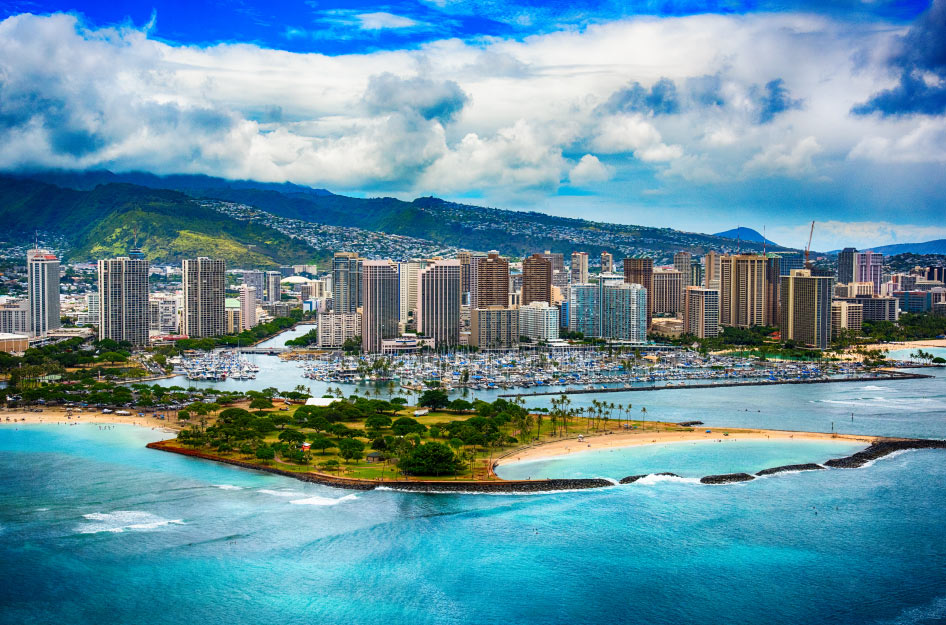
Honolulu isn’t just another conference city. It is the geographic bridge between Asia, North America, and Latin America, three of the most active regions in Ethereum’s global ecosystem. It has a world-class convention center built specifically for events of this scale, 30,000+ hotel rooms within walking distance, direct flights from Tokyo, Seoul, Sydney, Auckland, and every major US city, and a crypto-regulatory environment that is among the friendliest in America. Hosting Devcon in Hawaiʻi would be the first time the event has ever come to the Pacific, and it would send a powerful signal: Ethereum belongs everywhere.
 Country and Entry
1. What are the visa restrictions for the country?
Visa Accessibility
The United States participates in the Visa Waiver Program (VWP), which allows citizens of 42 countries, including Japan, South Korea, Australia, New Zealand, the UK, Germany, France, and most of the EU, to visit for up to 90 days without a visa, using the ESTA system. ESTA approval is typically instant and valid for two years.
For attendees from countries that require a US visa (notably India, many African nations, parts of Latin America and Southeast Asia), B-1/B-2 tourist/business visas are the standard route. While US visa processes are not trivial, a few things make Honolulu unusually viable:
- Conference letter support: The Devcon team could issue invitation letters supporting visa applications, as is standard practice for large international events
- US consular presence is global: unlike many proposed locations, applicants can schedule visa appointments at US embassies almost anywhere in the world
- The US visa, once obtained, is multi-entry and typically valid for 10 years: attendees who secure a visa for Devcon can return to the US for future events without reapplying
Addressing the  in the room: Yes, US visa requirements are a real barrier for some attendees. This is a legitimate concern. However, Devcon has drawn global audiences to locations that required visas for significant portions of attendees. A strong scholars program and visa support initiative, possibly in partnership with the Hawaiʻi Tourism Authority and local universities, could meaningfully offset this challenge. More on this below.
2. How easy is the international access?
Asia-Pacific :
- Tokyo (Narita & Haneda): Japan Airlines, ANA, Hawaiian Airlines
- Seoul (Incheon): Korean Air, Asiana
- Sydney: Jetstar, Hawaiian Airlines
- Auckland: Hawaiian Airlines, Air New Zealand
US Mainland (20+ direct routes):
- Los Angeles, San Francisco, Seattle, Denver, Chicago, New York (JFK/EWR), Dallas, Atlanta, Houston, Phoenix, Portland, San Diego, Las Vegas, Minneapolis, Salt Lake City, Boston, Austin, Detroit, Anchorage, and more
- Carriers include United, Delta, American, Hawaiian, Alaska, and Southwest
Latin America:
- LATAM Airlines offers direct flights from Santiago (SCL), Lima (LIM), and Bogotá (BOG)
Canada:
- Direct from Toronto and Ontario
This connectivity is uniquely powerful. No other city proposed for Devcon can claim direct flights from Asia, Oceania, Latin America, and North America simultaneously.
3. What about the safety and political stability of the region?
Hawaiʻi is one of the safest states in the US. Honolulu consistently ranks among the safest large cities in America. The state has strong civil liberties protections, an independent judiciary, and a deeply welcoming culture rooted in the concept of aloha, which extends beyond a greeting into a genuine ethos of hospitality, respect, and care for others.
Hawaiʻi is also a deeply multicultural place. It is the most ethnically diverse state in the US, with no single racial majority. Asian Americans make up the largest demographic group (~37%), followed by multiracial residents (~24%), white residents (~22%), and Native Hawaiian and Pacific Islanders (~10%). This cultural fabric means international attendees from Asia, the Pacific, and beyond are not arriving as outsiders. They are arriving in a place that already looks and feels like them.
4. How expensive are venue rentals, accommodation, food, and transport?
Honolulu is often perceived as expensive, but the reality is more nuanced:
- Off-season hotel rates (September-October) drop significantly with average rates on Oahu falling to their lowest levels of the year, comparable to cities like Lisbon, Warsaw, or Barcelona during off-peak
- Food costs range widely from affordable poke bowls, plate lunches, and food trucks ($8-15) to high-end dining
- Rideshare across the city is cheap given the compact geography
- No resort fees at many properties if negotiated as part of a room block for a major conference
- Hawaiʻi Tourism Authority and Meet Hawaiʻi actively provide financial incentives and logistical support for major conferences. This would be a partnership, not just a booking
5. When is the climate the best?
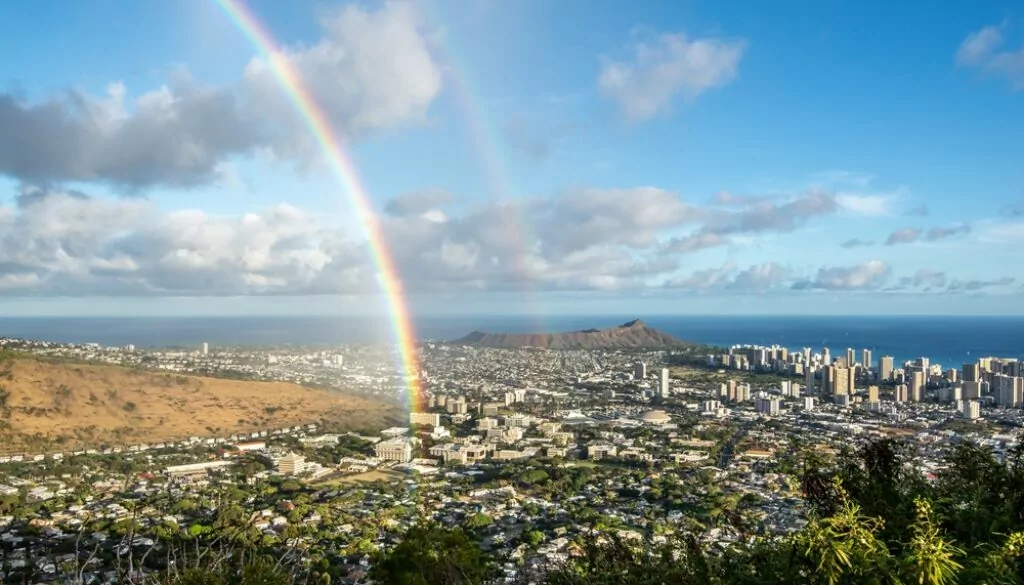
Honolulu has comfortable weather year-round. Average temperatures range from 78°F (26°C) in winter to 85°F (29°C) in summer. There is no “bad weather” season for events. The dry season (April-September) is ideal, but even the “wet season” (October-March) sees only brief, passing showers that would not disrupt events.
Recommended timing: Q4 (October-November) aligns with Devcon’s typical schedule and falls in Honolulu’s off-season/shoulder season meaning:
- Lower hotel rates (September and October are the quietest tourist months)
- Fewer crowds
- Excellent weather (low 80s°F, minimal rain)
- No major competing events (the Aloha Festival is a single day in late September; the Film Festival is small)
This is a meaningful cost advantage over winter/summer proposals.
 City and Venue
1. How easy is the transportation in the city (between venues, airport, etc.)?
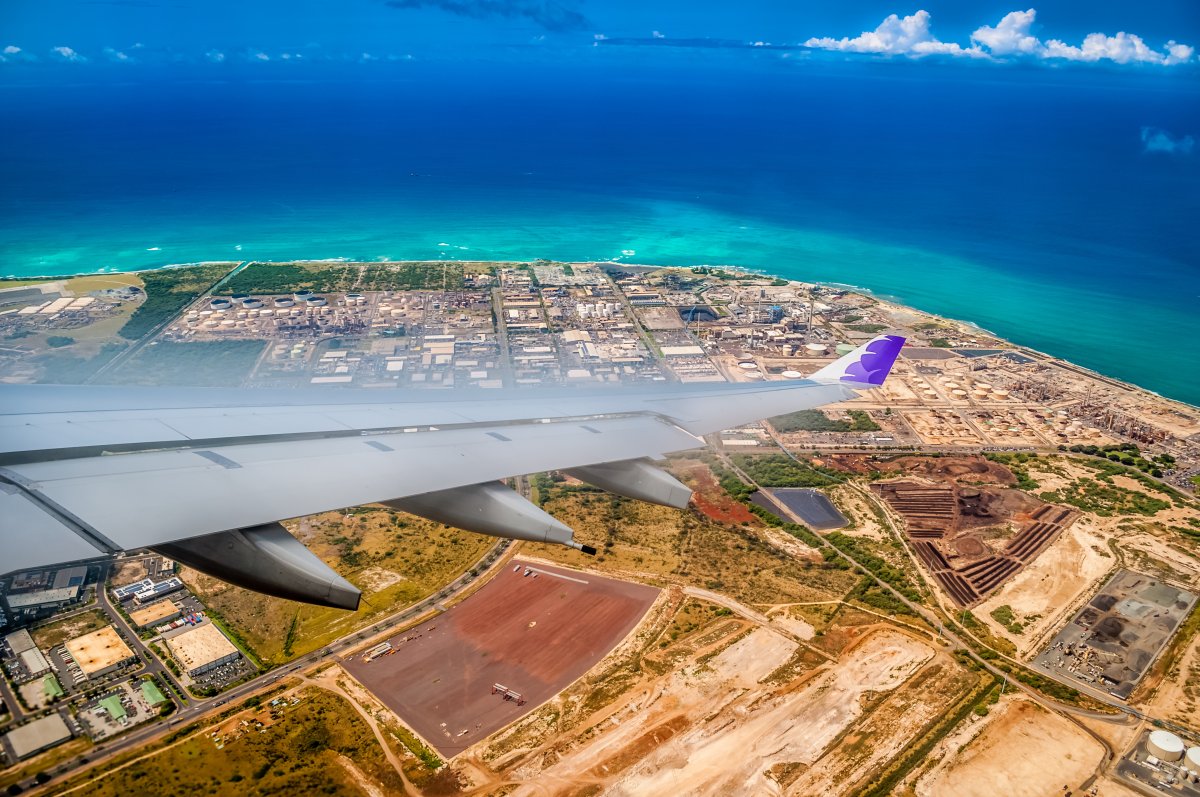
- Airport to venue: roughly 15 minutes by car/rideshare; Skyline rail now connects airport to Ala Moana (walking distance to HCC)
- Within Waikiki: Everything is walkable. The convention center, hotels, restaurants, and beaches are all within a tight corridor
- Rideshare: Uber and Lyft operate throughout Honolulu
- Public transit: TheBus system covers the island; the new Skyline rail improves connectivity
- No shuttles needed as a default plan with density of hotels around the venue eliminating this need
2. Are there modern venues (WiFi/Maneuverability/Catering)?
The Venue: Hawaiʻi Convention Center (HCC)
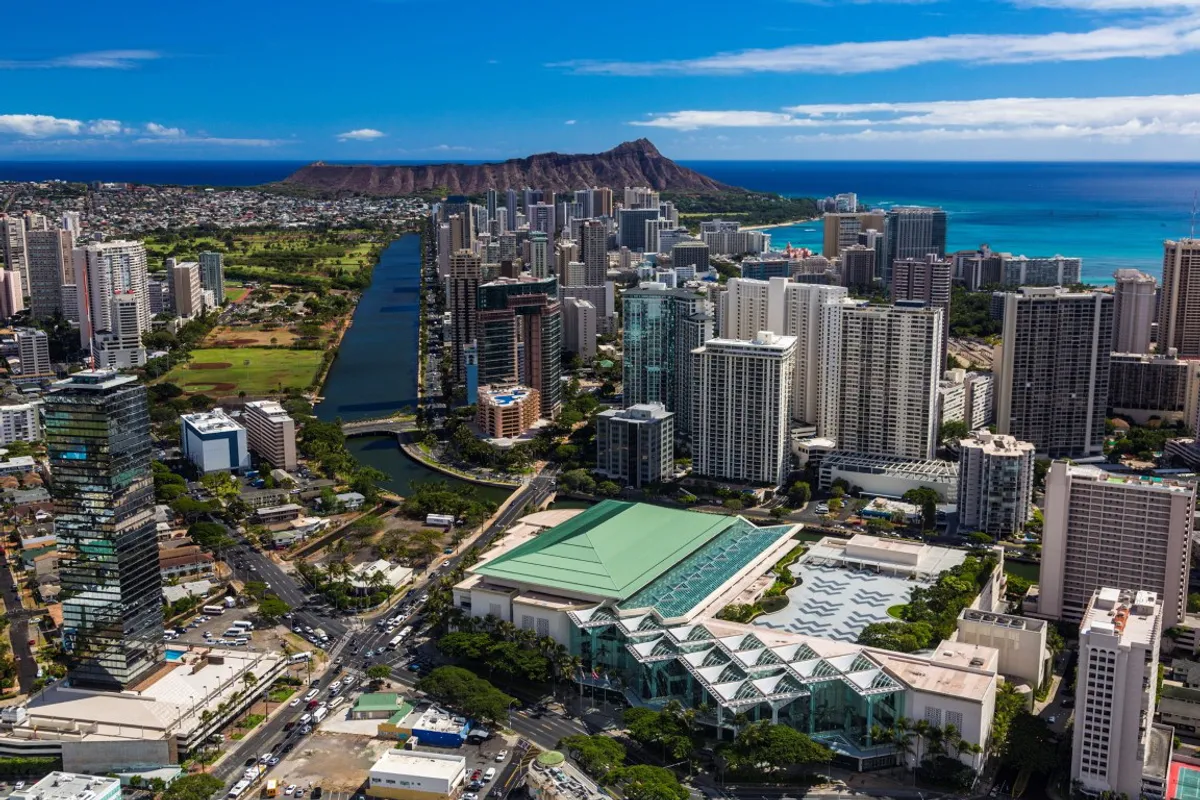
The Hawaiʻi Convention Center (HCC) is purpose-built for exactly this kind of event.
| Feature | Details |
|---|---|
| Total space | 1.1 million square feet |
| Exhibit hall | 200,000+ sq ft (divisible into 3 halls), 35-ft ceilings, 13,000+ theater-style capacity |
| Ballroom | 35,000 sq ft Kalākaua Ballroom (divisible into 3) |
| Meeting rooms | 47 rooms, including 10 with mountain views, terraces, or courtyards |
| Theaters | 2 tiered-seating presentation theaters |
| Rooftop garden | 2.5-acre rooftop events garden for 1,000-person banquets or 2,500-person receptions |
| Parking | 690-space on-site garage |
| Awards | Voted “Most Beautiful Convention Center in the World” by IAEE; 12 consecutive Prime Site Awards |
The building itself is a statement. Designed by Wimberly Allison Tong & Goo and LMN Architects, over 60% of the center is open to the sky. Natural trade winds provide ventilation in the concourses and hallways with no air conditioning needed in common areas. The architecture incorporates waterfalls, fishponds, courtyards, and a $2 million permanent art collection in partnership with the Hawaiʻi State Foundation on Culture and the Arts.
This is not a generic convention box. It is an experience.
The center hosts APEC summits, the Pokémon World Championships, and 250+ events annually. It has full F&B kitchen facilities, event-grade Wi-Fi, and a dedicated staff with a 95%+ planner satisfaction rating.
Hotel Inventory - Walkable, Dense, and Scalable
Waikiki has over 30,000 hotel rooms within walking distance of the convention center, across every price tier. This is more hotel inventory, closer to the venue, than almost any other city being proposed. The convention center sits directly at the gateway to Waikiki. Attendees walk out the front door and are immediately in the heart of the hotel, dining, and shopping district.
Internet & Production
Hawaiʻi is a major Pacific telecommunications hub with multiple undersea fiber optic cables connecting it to both the US mainland and Asia. The convention center has full event-grade connectivity. Local production companies service major international events (APEC, military conferences, broadcast events) year-round.
Healthcare
The Queen’s Medical Center and Straub Medical Center are both full-service hospitals within 10 minutes of the venue.
3. Are there venues with the capacity to host between 10-20k people?
Primary Venue: Hawaiʻi Convention Center
As detailed above, the HCC is the anchor. Its 200,000+ sq ft Kamehameha Exhibit Hall seats 13,000+ theater-style and is divisible into three independent halls. Combined with the 35,000 sq ft Kalākaua Ballroom (also divisible into three), two tiered-seating theaters, 47 meeting rooms, and the 2.5-acre rooftop garden, the center can comfortably accommodate a 15,000-20,000 attendee event with simultaneous tracks, breakout sessions, community hubs, and exhibition space all under one roof. The center also features drive-in access for exhibit setup, a 350 lbs/sq ft floor load capacity for heavy installations, and on-site food & beverage production. This is not a venue being stretched to fit Devcon. It is a venue built for events of exactly this scale.
Side Event & Satellite Venues
One of Honolulu’s greatest advantages is the density of conference-capable hotel venues within walking distance of the HCC. The Devcon/Devconnect model thrives on side events, workshops, hackathons, and community gatherings spread across a walkable area, and Waikiki delivers this better than almost any other city:
| Venue | Distance from HCC | Event Space | Capacity |
|---|---|---|---|
| Hilton Hawaiian Village | 0.7 mi (12 min walk) | 150,000+ sq ft across 3 conference centers, 57 meeting rooms, outdoor lawns | Up to 2,000 reception; Hawaiʻi’s largest ballroom (27,000+ sq ft) |
| Sheraton Waikiki Beach Resort | 0.8 mi (15 min walk) | 66,900+ sq ft, 18 meeting rooms | Up to 2,600 in the Hawaii Ballroom; recently completed $200M renovation |
| Hyatt Regency Waikiki | 0.9 mi (15 min walk) | 24,000+ sq ft | Multiple ballrooms and breakout rooms |
| Moana Surfrider (Westin) | 1.0 mi (18 min walk) | Historic ballroom + oceanfront event lawn | Intimate venue for 200–500; iconic setting |
| Sheraton Princess Kaiulani | 0.8 mi (15 min walk) | Flexible event spaces | Up to 500 guests; great for focused workshops |
| ʻAlohilani Resort | 1.0 mi (18 min walk) | 39,700+ sq ft | Modern venue, recently renovated |
| Outrigger Waikiki Beachcomber | 0.9 mi (15 min walk) | Theater space + meeting rooms | Ideal for presentations and screenings |
| Ala Moana Hotel | 0.3 mi (5 min walk) | 30,000+ sq ft | Directly adjacent to HCC; perfect overflow |
The total available meeting and event space across Waikiki hotels exceeds 500,000 square feet, not including the convention center itself. This means hundreds of simultaneous side events, workshops, hackathons, community hubs, and social gatherings can operate within a 20-minute walking radius, all without requiring any shuttle infrastructure.
For context: Devconnect Istanbul spread events across a much wider area requiring transit. Devconnect Buenos Aires concentrated at La Rural but relied on 500+ community events across the city. In Honolulu, the entire ecosystem, including the main venue, side events, hotels, dining, socializing, fits within a single walkable corridor along Kalākaua Avenue.
4. What are attractions in or around the city, and how close are they to the venue?
Honolulu is one of the most attraction-dense cities in the world, and nearly everything is close to the venue. Here’s what attendees can experience:
Within Walking Distance (under 1 mile from HCC)

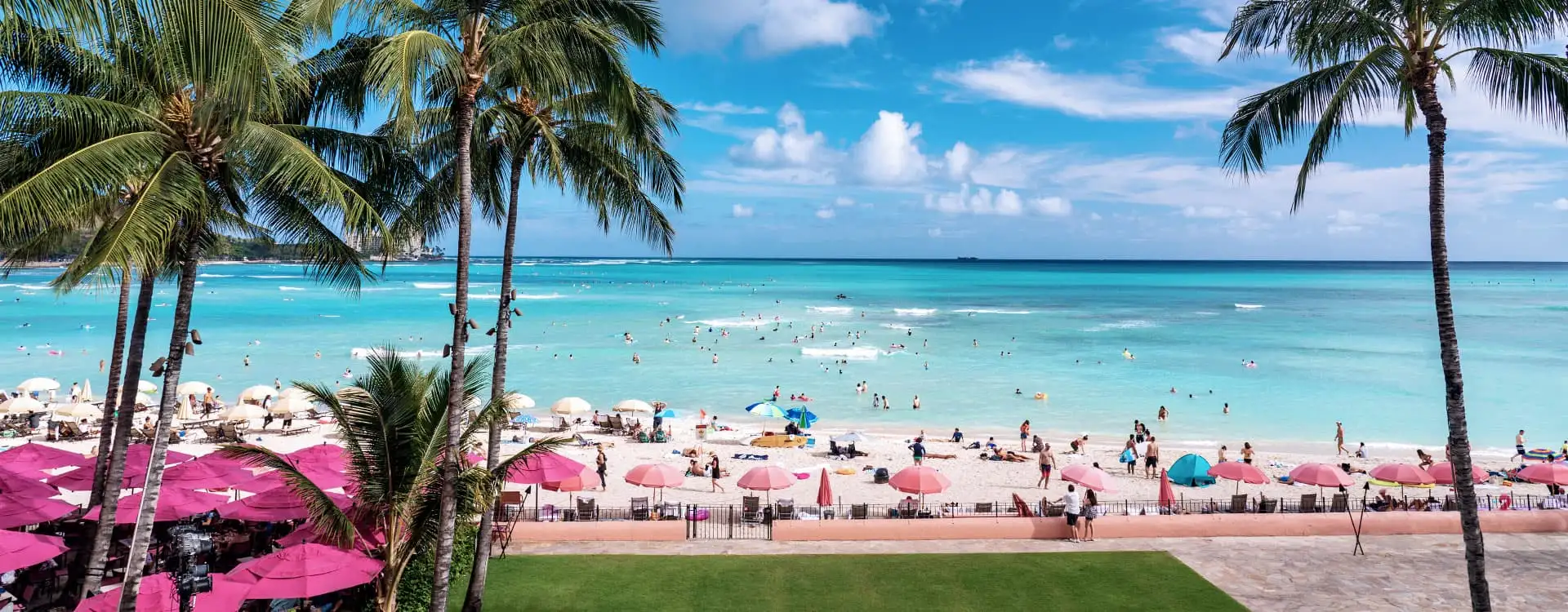
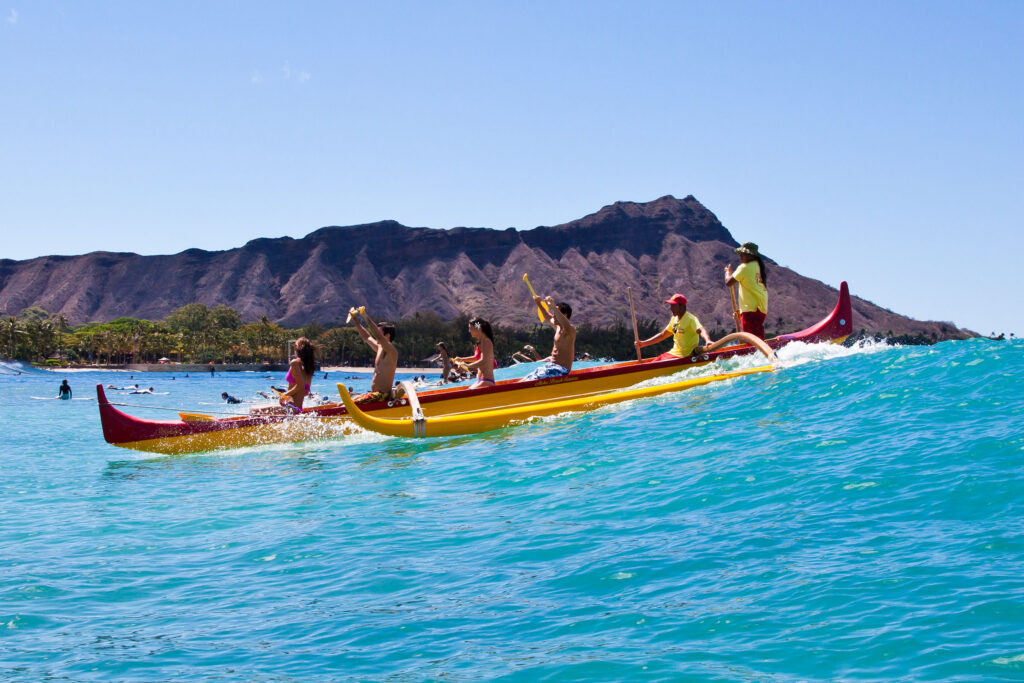
- Waikiki Beach (0.7 mi): iconic 2-mile stretch of white sand; surfing lessons, outrigger canoe rides, sunset paddleboarding
- Ala Moana Center (0.3 mi): the world’s largest open-air shopping mall, directly across from the convention center
- Ala Moana Beach Park (0.5 mi): calm, local beach perfect for a midday swim; Magic Island offers stunning sunset views
- Royal Hawaiian Center (0.8 mi): cultural programming, lei-making, hula lessons, plus high-end shopping
- Kalākaua Avenue: the main boulevard connecting HCC to Waikiki; lined with restaurants, shops, and street performers
Short Trip (under 30 minutes)
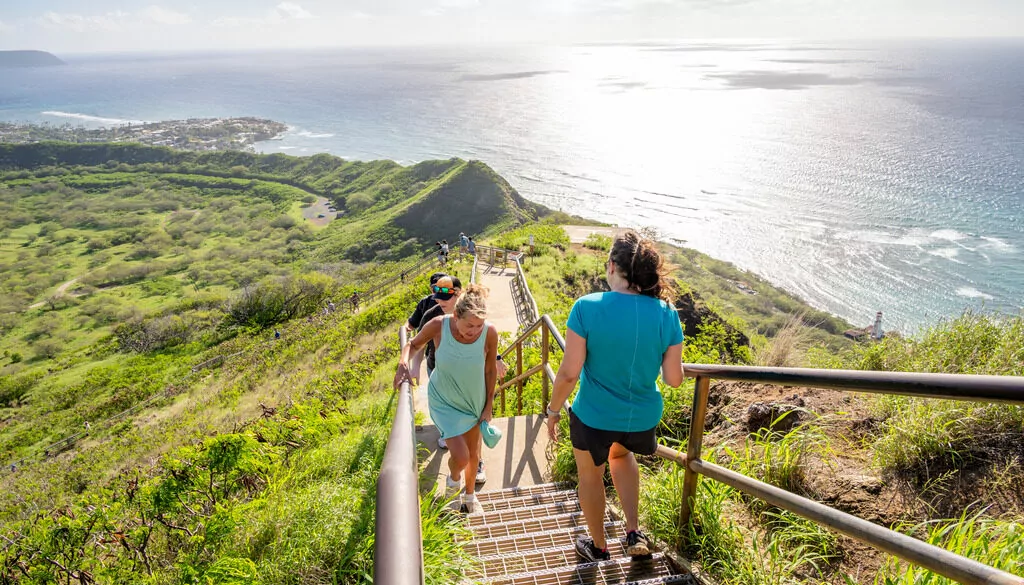
- Diamond Head State Monument (3 mi / 10 min drive): the iconic volcanic crater hike with panoramic views of Honolulu, the ocean, and the Ko’olau mountains. One of the most recognizable landmarks in the Pacific. A sunrise hike is a must.
- Honolulu Zoo (1.5 mi): 42-acre zoo with tropical species, right at the edge of Waikiki
- Waikiki Aquarium (1.7 mi): one of the oldest aquariums in the US, showcasing Pacific marine life
- Chinatown Honolulu (3 mi): one of the oldest Chinatowns in America; incredible dim sum, Asian markets, art galleries, and nightlife
- ʻIolani Palace (3 mi): the only royal palace on American soil; a living piece of Hawaiian sovereignty and history
- Bishop Museum (5 mi): the premier museum of Hawaiian and Polynesian cultural history
Half-Day Excursions
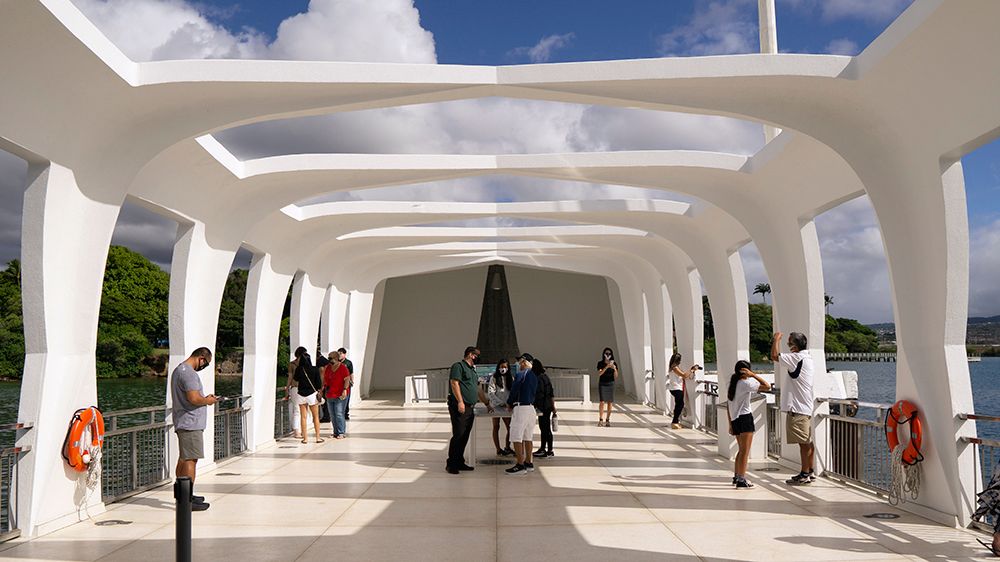
- Pearl Harbor National Memorial (11 mi / 25–45 min drive): the USS Arizona Memorial, Battleship Missouri, and the Pacific Aviation Museum. A profoundly moving experience and one of the most visited sites in Hawaiʻi
- North Shore (30 mi / 45 min drive): legendary surf breaks (Banzai Pipeline, Sunset Beach), shrimp trucks, small-town vibes, and the Polynesian Cultural Center
- Hanauma Bay (11 mi / 20 min drive): pristine snorkeling in a protected marine sanctuary set in a volcanic crater
- Kualoa Ranch (25 mi / 35 min drive): the dramatic valley where Jurassic Park was filmed; ATV tours, horseback riding, and ziplines
- Manoa Falls Trail (5 mi): a lush rainforest hike to a 150-foot waterfall, just minutes from the city
 Ethereum Community and Impact
1. How does the Ethereum community look like in this region (e.g.: existing large community/ small but growing rapidly, etc.)?
Hawaiʻi’s Crypto Awakening
Hawaiʻi’s relationship with crypto has undergone a dramatic transformation:
- 2020–2024: The state ran the Digital Currency Innovation Lab (DCIL), a regulatory sandbox that allowed crypto companies to operate under experimental rules while the state studied the space
- January 2024: The Division of Financial Institutions concluded that crypto activities do not constitute money transmission under Hawaiʻi law, eliminating the need for a state money transmitter license
- July 2024: The new rules took effect. Crypto companies can now operate freely in Hawaiʻi as unregulated businesses at the state level (subject to federal requirements)
- August 2024: Coinbase became available in Hawaiʻi
- September 2024: Major Web3 companies including MetaMask and Transak began establishing operations in the state
This is not a state that is merely “tolerant” of crypto, it is actively welcoming it. Hosting Devcon here would amplify this momentum.
Local Community & Events
- Hawaiʻi Blockchain Summit (September 2024): the first major blockchain event in Hawaiʻi, organized by INOA
- Hawaiʻi Blockchain Youth Summit (March 2025): focused on university students, with workshops on smart contract development taught by BuidlGuidl members
- Decentralized Hawaiʻi Meetup Group : active local community (155+ members)
- International Conference on Blockchain (ICBC): held in Hawaiʻi in 2022 and 2023
- International Conference on Blockchain and Machine Intelligence Applications (June 2025): academic blockchain conference in Honolulu
University Presence
University of Hawaiʻi at Mānoa is the state’s flagship research university with:
- A strong computer science program (roughly 550 students across B.S. and B.A. programs)
- Multiple blockchain/crypto courses
- Active student interest in Web3 demonstrated by participation in the Blockchain Youth Summit
- Faculty with research interests in cryptography and distributed systems
Devcon’s presence would catalyze a permanent acceleration of Ethereum education and development at UH and across Hawaiʻi’s educational system.
2. What is the potential of Ethereum to have an impact in that region?
The Impact Thesis
Devcon has historically gone to places where Ethereum can catalyze real change. Hawaiʻi fits this mandate:
-
Economic diversification: Hawaiʻi’s economy is overwhelmingly dependent on tourism and the military. The state government has explicitly identified technology and innovation as priorities for economic diversification. A Devcon in Honolulu, bringing 15,000+ technologists, entrepreneurs, and builders, would put Hawaiʻi on the global tech map in a way that no other single event could.
-
Pacific representation: Ethereum has never had a major gathering in the Pacific. Not once. Pacific Island nations and communities are deeply affected by issues that Ethereum can address such as remittances, financial inclusion, identity systems, climate data. Bringing Devcon to the Pacific is an act of inclusion.
-
Real-world crypto adoption signal: Hawaiʻi’s journey from “crypto companies can’t operate here” to “we’ve eliminated the need for licenses” is one of the most dramatic regulatory shifts in US crypto history. Hosting Devcon in Hawaiʻi during this moment would reinforce the narrative that progressive regulation works.
-
Local charitable partnerships: The Devcon team could partner with local organizations to create lasting impact. Possible partners include:
- Aloha United Way: Hawaiʻi’s largest nonprofit network
- Hawaiian Community Foundation: focused on Native Hawaiian wellbeing
- Kanu Hawaiʻi: sustainability and community resilience nonprofit
- Hawaiʻi Youth Services Network: supporting at-risk youth
A “Devcon Gives Back” initiative: Hackathon bounties focused on local problems, donations to local charities, tech workshops at local schools would leave a permanent positive footprint.
-
Environmental alignment: Hawaiʻi runs on about 30% renewable energy and is targeting 100% by 2045, the most ambitious clean energy mandate of any US state. Post-merge Ethereum’s environmental story pairs naturally with Hawaiʻi’s sustainability leadership.
3. Which event would be ideal here? (i.e. Devcon, Devconnect, or another type of Ethereum community event)
The Case for Devcon
Honolulu checks every box for a full-scale Devcon:
- Venue capacity: The HCC can seat 13,000+ and accommodate 15,000-20,000 with exhibit space, community hubs, and breakout sessions, matching the scale of Devcon SEA (12,500 attendees) and Devcon 8’s target
- Hotel inventory: 30,000+ rooms within walking distance is more than enough for the largest Devcon ever
- International access: Direct flights from Asia, Oceania, the Americas, and connections from Europe mean that attendees from every major Ethereum region can reach Honolulu
- Production infrastructure: APEC-tested, ASM Global-managed, with a deep bench of local AV, catering, and event production vendors
- Impact: Devcon’s stated mission includes catalyzing growth in newer Ethereum communities and giving focus to regions where Ethereum can have the most impact. Hawaiʻi, with its new crypto-friendly regulation, its position as a gateway between East and West, and its total absence from the Ethereum event map, is exactly where Devcon should plant a flag
The strongest argument: Devcon has been to Europe (Berlin, London, Prague), Asia (Shanghai, Osaka, Bangkok), and Latin America (Cancún, Bogotá). It has announced India for 2026. But Devcon has never been to the Pacific, the ocean that connects the world’s two most active Ethereum regions (Asia and the Americas). Honolulu, as a US city with Asian soul, sitting at the geographic midpoint of the Pacific, is the natural place to make that happen.
The Case for Devconnect
Devconnect’s distributed model of independent deep-dive events across walkable venues is exactly what Waikiki is built for. The HCC could serve as the central cowork hub with independent events radiating into hotel ballrooms and beachfront spaces across Kalākaua Avenue. Devconnect Buenos Aires drew 14,000+ across 500+ events. Waikiki’s infrastructure can easily match that.
- How is hosting events in that city benefiting the Ethereum ecosystem?
Devcon and Devconnect don’t just happen in a city, they transform it. Here’s what Honolulu brings to Ethereum and what Ethereum brings to Honolulu:
What Honolulu Gives Ethereum
-
A Pacific beachhead: Ethereum has no significant event presence in the Pacific. Hosting in Honolulu opens the door to deeper engagement with Pacific Island nations, Oceania, and the massive Asia-Pacific tech corridor. It signals that Ethereum is truly global, not just a European/Asian/Latin American circuit.
-
US regulatory engagement in a crypto-friendly context: Hawaiʻi’s decision to drop money transmitter requirements for crypto companies is one of the boldest regulatory moves in US crypto history. Hosting Devcon during this window creates a natural platform for US regulatory dialogue without the hostility or complexity of hosting in a more contentious US jurisdiction like New York or DC.
-
Asia-Americas bridge: No other city proposed can claim to be equidistant from Tokyo, Seoul, Sydney, Los Angeles, and São Paulo. Honolulu’s position as a literal crossroads means Devcon becomes an event where Asian, American, Oceanian, and Latin American Ethereum communities converge naturally, not as guests visiting “someone else’s” city, but as equals meeting on neutral ground.
-
A destination people will actually attend: Let’s be honest, attendance is partly driven by how compelling the destination is. Devcon in Bangkok set a record. Honolulu would do the same. The promise of building in paradise is not frivolous, it’s strategic. Higher attendance means more collaboration, more cross-pollination, and more impact.
-
University pipeline: UH Mānoa’s computer science program, combined with the Blockchain Youth Summit infrastructure, means Devcon can directly plug into a pipeline of young developers who are curious about Ethereum but have never had the chance to attend a major event. Scholarships for local students would create lasting impact.
What Ethereum Gives Honolulu
In return, Ethereum would inject tens of millions into Honolulu’s economy, position the city as a serious tech destination beyond tourism, seed lasting developer community infrastructure, and create opportunities for charitable partnerships with organizations like Aloha United Way and the Hawaiian Community Foundation.
 Concerns and Downsides
Every location has its pros and cons. It’s important to also consider the potential downsides.
- What are possible risks?
Every location has tradeoffs. Here’s an honest assessment:
| Risk | Response |
|---|---|
| US visa requirements | Real challenge for some attendees, particularly from the Global South. Mitigation: expanded scholars program, visa invitation letters, partnership with Hawaiʻi Tourism Authority for institutional support, advance visa clinics. The US B-1/B-2 visa is multi-entry and valid for up to 10 years once obtained, meaning this investment pays off for future US-based events too. |
| Island supply chain considerations | Hawaiʻi imports most goods. Custom merchandise, signage, and specialized equipment may need to be shipped in advance. This is standard practice for Hawaii-based conferences and well-understood by local production companies, but requires slightly more lead time than mainland venues. |
| Time zone challenges for remote participation | Hawaiʻi Standard Time (UTC-10) is awkward for European viewers watching livestreams. However, it’s excellent for Asia-Pacific audiences (early morning in Asia), and recordings can be made available immediately after sessions. |
| Hawaiʻi’s crypto community is small | True today, but that’s exactly the thesis. Devcon’s impact is greatest in places where it catalyzes growth. The DCIL regulatory shift and the Blockchain Youth Summit show that Hawaiʻi is ready for the spark. |
- What could be the downsides?
Being transparent about the real tradeoffs:
| Downside | Response |
|---|---|
| Higher baseline cost than some proposals | Honolulu is more expensive than cities like Jakarta, Nairobi, or Warsaw. Off-season timing (Sept-Oct) and conference-negotiated room blocks significantly mitigate this, as do Hawaiʻi Tourism Authority incentives. Budget accommodation (hostels, Airbnbs) is plentiful. The Devcon team should consider expanding financial aid and scholarship programs proportionally. |
| Distance from Europe | Europeans face the longest travel time of any major Ethereum constituency, 16-18+ hours with one stop via LAX, SFO, or Seattle. This is a real barrier for casual attendees, though dedicated community members have shown willingness to travel comparable distances for Devcon Bangkok and Devcon Bogotá. Combining Devcon with a Hawaiʻi vacation is also a strong incentive. |
| No prior Devcon in the Pacific | That’s the point. Ethereum has been to Europe, Asia, and South America, never the Pacific. This is an opportunity to open a new frontier, not a reason to avoid it. |
| Perception of Hawaiʻi as a “vacation destination” | Being in a beautiful place doesn’t diminish the work. Devcon in Bangkok (with its beaches and nightlife) was the most productive and well-attended Devcon ever. Hawaiʻi’s beauty is an asset, not a liability. It drives attendance, which drives impact. |
 Additional Information
Unique Assets
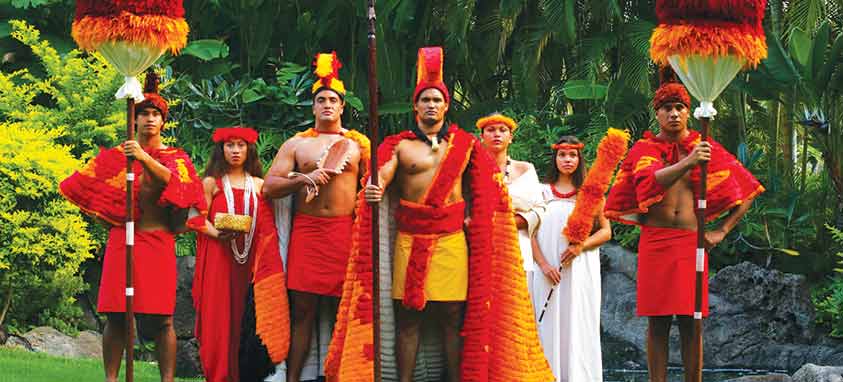
- Cultural experience: Luau, hula, surfing, snorkeling and hiking Diamond Head would give Devcon attendees get an experience unlike any other tech conference
- Food scene: Hawaiʻi’s fusion cuisine (Japanese, Chinese, Korean, Filipino, Hawaiian, American) is extraordinary and inclusive of diverse dietary needs
- Side event venues: From beachfront hotel ballrooms to the Outrigger Theatre, there are dozens of venues for workshops, hackathons, and social events within Waikiki
- Natural beauty: Nothing recharges a builder community like stepping out of a conference hall and being on a beach, overlooking Diamond Head, in 80-degree weather
Social Proof
- APEC 2011 was held at the Hawaiʻi Convention Center with 10,000+ attendees from 21 Pacific Rim nations
- The 2024 Pokémon World Championships drew thousands of international attendees
- The Honolulu Marathon attracts 30,000+ runners from around the world annually
- Hawaiʻi regularly hosts international summits, military conferences, and academic gatherings
Key Links
- Hawaiʻi Convention Center
- HCC Event Planning Toolkit
- HCC Floor Plans (Interactive)
- Meet Hawaiʻi: Convention & Event Planning
- Hawaiʻi Blockchain Summit 2024
- Hawaiʻi Crypto Regulation Overview
- Direct Flights to Honolulu (HNL)
- Visa Waiver Program (42 countries)
In Closing
Ethereum is a global protocol. Its flagship gathering should reflect that by going to places it has never been. The Pacific, home to billions of people across Asia, Oceania, and the Americas, has never hosted a Devcon or Devconnect.
Honolulu is not just a beautiful destination. It is a logistically proven, infrastructure-rich, crypto-forward, culturally welcoming city at the geographic center of the Pacific. It has the venue, the hotels, the flights, the weather, and the political environment. What it doesn’t yet have is a world-class Ethereum event, and that’s exactly why Devcon should go there.
Let’s bring some Aloha to Ethereum. 