Proposed location: Munich, Germany 
Munich is the engineering capital of Europe and the most compelling case for bringing Devcon back to the continent after 7 years away (the last European Devcon was Prague 2018). It is not just like every other city, here Ethereum is actively researched, built on and deployed at institutional scale, backed by three world-class universities (two technical), a thriving startup ecosystem, and a growing ETH community that connects students, researchers, and engineers from across the DACH region and Central Europe. ETH Munich is the local community organiser, running regular events, workshops, and hackathons. See calendar.
Country and Entry
1. What are the visa restrictions for the country?
Germany is part of the EU Schengen Area, one of the most accessible visa zones in the world. Citizens of 60+ countries (US, UK, Canada, Australia, Japan, South Korea, Brazil, and all of the EU) enter visa-free for up to 90 days. For others, the Schengen visa is a well-established, predictable process supported by a global network of German consulates. Germany has no history of arbitrary entry denials for tech conference attendees and is considered one of the safest, most friction-free destinations in the world for international travel.
2. How easy is the international access?
Munich Airport (MUC) is Germany’s second-largest international hub and one of Europe’s top-5 airports by connectivity, consistently rated among the best in the world for passenger experience. Direct routes include:
-
North America: New York (JFK/EWR), Los Angeles, Chicago, San Francisco, Toronto, and more
-
Asia: Tokyo, Beijing, Shanghai, Hong Kong, Seoul, Singapore, Bangkok
-
Middle East: Dubai (Emirates), Doha (Qatar Airways), Abu Dhabi (Etihad), Istanbul
-
Africa & India: Mumbai, Delhi, Nairobi, Johannesburg
-
All major European hubs via Lufthansa and partner airlines
Munich is uniquely accessible from Central and Eastern Europe with cities like Vienna (1h), Prague (1.5h by train or flight), Bratislava (1.5h), Warsaw (1.5h flight), Budapest (1.5h), Kyiv and Belgrade are all within easy reach. Not even mentioning perfect connections to the Western Europe. This matters a lot for a Devcon that wants to activate the full European Ethereum ecosystem.
3. What about the safety and political stability of the region?
Munich is consistently ranked among the top 5 safest cities in the world by the Economist Intelligence Unit and Mercer Quality of Life index. Germany is a stable democracy with robust civil liberties, strong rule of law, and no significant political risk. The city regularly hosts major international summits including G7 meetings, IAA Mobility (world’s largest automotive show, ~750,000 attendees), Oktoberfest (6-7 million attendees), and international trade fairs at Messe München.
4. How expensive are venue rentals, accommodation, food, and transport?
Venues: ICM (International Congress Center Munich) and Messe München are world-class, competitively priced compared to European equivalents like Amsterdam or Paris. Rates are transparent and widely used by major international events.
Accommodation: Wide range with budget hostels from €40/night, mid-range hotels €100–150/night, premium hotels €250+/night. The city has over 80,000 hotel beds.
Food: Munich has options at every price point with affordable Bavarian cuisine from €8-15/meal, mid-range restaurants €15-30, with world-class dining above that.
Transport: Excellent value. Single U-Bahn/S-Bahn tickets ~€3.90; day tickets ~€9.20. Conference-period transit passes are standard for major events.
5. When is the climate the best?
Devcon traditionally runs in Q4 (October-November), which is ideal for Munich. We would suggest the end of October with crisp Bavarian autumn weather (10-16°C in October), low rainfall and clear skies. The city is vibrant in this period and post-Oktoberfest energy, with excellent indoor and outdoor venue options. No extreme heat, no monsoon risk.
City and Venue
1. How easy is the transportation in the city (between venues, airport, etc.)?
Munich has one of the best public transport systems in Europe with fully integrated U-Bahn (metro), S-Bahn (suburban rail), trams and buses. The S-Bahn airport link (S1/S8) runs every 10 minutes and reaches the city centre in 38 minutes for €13.60. All major venue clusters (Messe München, ICM, city-centre hotels) are directly connected. Munich is also very walkable and bicycle-friendly. There are no traffic chokepoints comparable to other large European event cities, with sometimes village-like vibe. Maybe that is why some locals call it a “million village”.
2. Are there modern venues (WiFi/Maneuverability/Catering)?
Munich has world-class event infrastructure used for some of the largest conferences and trade fairs on the planet:
-
ICM- International Congress Center Munich: Directly connected to Messe München. 25,000 sqm of flexible space, 16 halls, dedicated fibre internet, professional in-house catering. Designed for 10,000-20,000 attendees. Hosts major international summits regularly.
-
Messe München: One of Europe’s largest exhibition centres. 18 exhibition halls, 200,000 sqm total indoor space. IAA Mobility, EXPO REAL, and Laser World of Photonics all run here annually at massive scale.
-
MOC Event Center Munich: More compact, ideal for satellite events and hackathons. Central location, full catering and AV infrastructure.
All venues offer enterprise-grade WiFi, dedicated event networks and extensive on-site catering with both standard and custom options.
3. Are there venues with the capacity to host between 10-20k people?
Yes. ICM and Messe München can both comfortably accommodate 15,000-20,000+ attendees across multiple halls and conference spaces. The combined option or campus solution can be configured to match Devcon’s multi-track format with dedicated spaces for main stage, breakouts, hack spaces and community hubs.
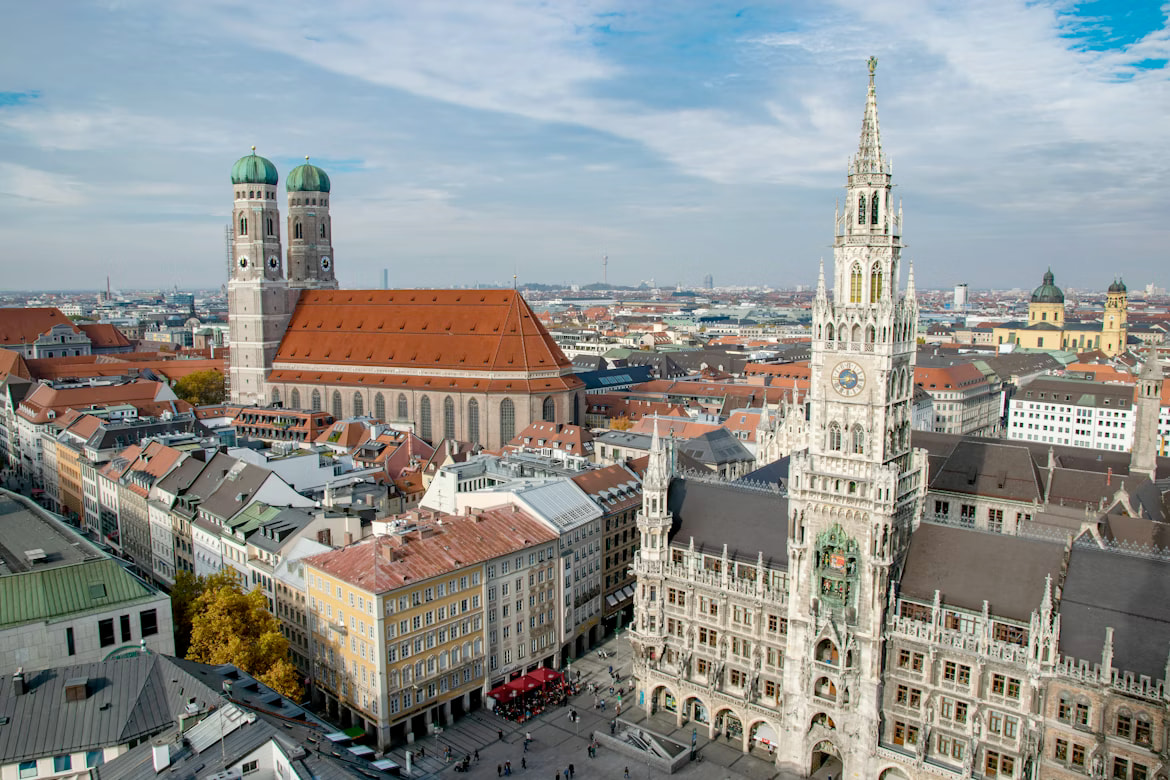
4. What are attractions in or around the city, and how close are they to the venue?
Munich offers a remarkable mix of culture, a lot of nature and urban life:
-
English Garden (Englischer Garten): One of the world’s largest urban parks (larger than Central Park), right in the city centre, which is ideal for walks and outdoor side events
-
Marienplatz & Old Town: 10-minute S-Bahn ride, beautiful historic centre with world-class restaurants and beer halls
-
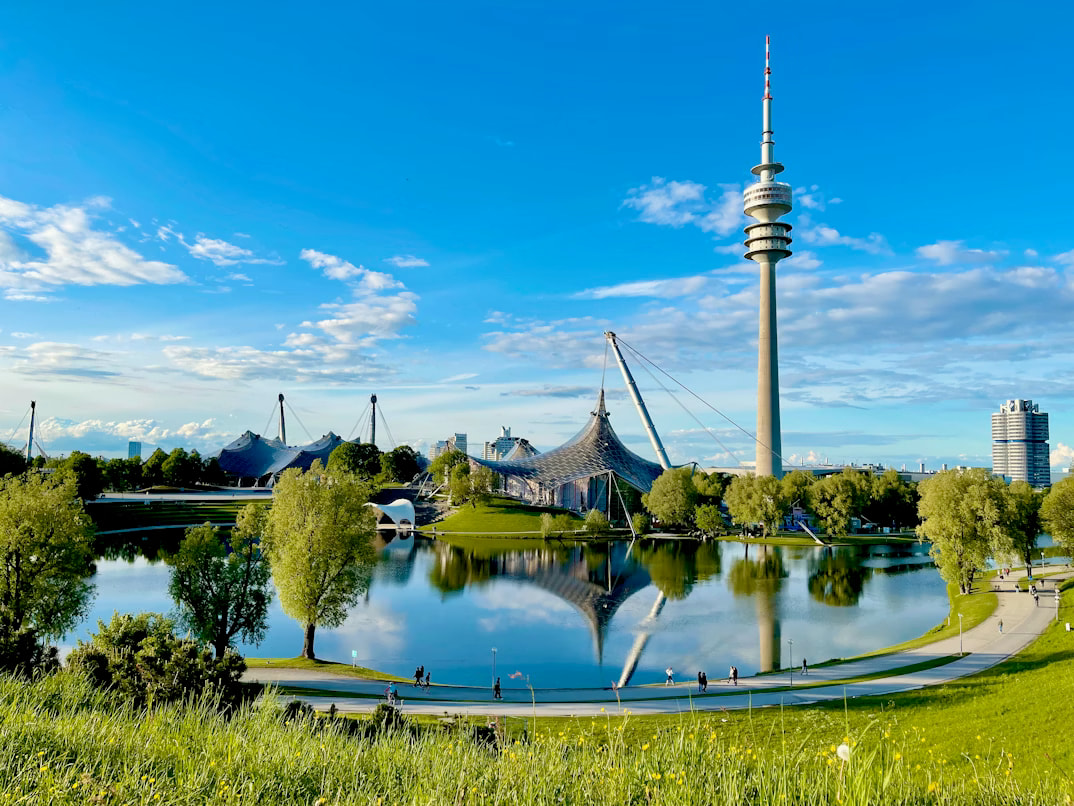
BMW World & Deutsches Museum: A showcase of engineering excellence fittingly symbolic for a city hosting an Ethereum conference
-
The Alps: Zugspitze and Garmisch-Partenkirchen are under 90 minutes from central Munich. Hiking, skiing, and mountain retreats are genuinely accessible for conference attendees extending their trip
-
Neuschwanstein Castle: 2 hours away, which is one of the world’s most visited landmarks
-
Oktoberfest grounds (Theresienwiese): Available for large outdoor events outside festival season, walking distance from the city centre
Ethereum Community and Impact
1. How does the Ethereum community look like in this region (e.g.: existing large community/ small but growing rapidly, etc.)?
Germany has one of the most serious Ethereum ecosystems in Europe, which is not measured by hype, but by research depth, institutional engagement and builders shipping real systems.
In Munich specifically there is:
-
ETH Munich: Active community running regular developer events, workshops, and hackathons. Connected to TUM, LMU, HM universities and local startups. Events calendar: luma.com/ethmunich
-
TUM Blockchain Club: Officially accredited student club at TU Munich. Runs the annual TUM Blockchain Conference, which is a multi-track research and industry event with speakers from Nethermind, EY, Base, World/Tools for Humanity, and EF.
-
TUM Blockchain Research Cluster: Interdisciplinary network of research groups at TU Munich investigating distributed systems, cryptoeconomics, smart contracts, and legal frameworks for on-chain systems. One of the most serious academic blockchain research centres in Europe.
Munich is also home to the European HQs of major tech companies and hundreds of deep tech and fintech startups actively exploring or building on Ethereum. The talent pipeline from three world-class universities feeds directly into this ecosystem every year.
We see Munich as the convergence point for European Ethereum.
To the west: EthCC (ethcc.io) - the continent’s largest annual Ethereum conference, running since 2018 across Paris, Brussels, and Cannes. ETH Barcelona (ethbarcelona.com) drawing 2,500+ attendees. Ethereum Zuri.ch (ethereumzuri.ch) in Switzerland, 3.5 hours away. ETH Rome / Urbe.eth (urbe.build) a permanent builder hub and annual technical conference in Italy.
To the east: ETH Bratislava (ethbratislava.com) in Slovakia, 2 hours away. ETH Prague (ethprague.com) annual conference and hackathon focused on research and Solarpunk values, ETH Warsaw (ethwarsaw.dev) with 2,000+ community members in Poland. ETH Belgrade (ethbelgrade.rs) home of Polygon, Tenderly, and DeFi Saver. ETH Kyiv (ethkyiv.com) Ukraine’s flagship Ethereum hackathon, running every year without interruption even during wartime. ETH Sofia (ethsofia.com) in Bulgaria.
All of them within a 1-3 hour flight of Munich. None of them have ever had a Devcon on their doorstep. Thus Munich doesn’t just have a community. It sits at the centre of a continent-wide movement that is ready to be brought together. Devcon here wouldn’t be a European event, it would be the European homecoming.
2. What is the potential of Ethereum to have an impact in that region?
The impact potential is enormous and concrete:
-
Germany is Europe’s largest economy and home to some of the world’s most influential industrial, financial, and technology institutions. BMW, Siemens, Allianz, MAN, and dozens of other global enterprises are headquartered in Munich. These are companies that need convincing and that a Devcon in their city would reach.
-
The DACH startup ecosystem (Germany, Austria, Switzerland) is one of Europe’s most active for deep tech and fintech. Munich specifically is home to hundreds of ambitious startups in AI, robotics, fintech, and blockchain actively building on or exploring Ethereum.
-
Academic pipeline: TUM, LMU, and Munich University of Applied Sciences produce thousands of elite engineers and computer scientists annually who are primed to build on Ethereum if they’re introduced to it. Devcon would accelerate this by an order of magnitude.
-
Central Europe gateway: Munich is the natural entry point for Ethereum to reach the rapidly growing developer communities in CEE (Central and Eastern Europe) Poland, Czech Republic, Slovakia, Hungary, Austria, Ukraine, and the Balkans all within 2 hours of flight from Munich.
-
MiCA and EU regulatory context: Germany is at the centre of Europe’s evolving digital asset regulation. Hosting Devcon here signals to European regulators and institutions that Ethereum is serious, professional, and here to stay.
3. Which event would be ideal here? (i.e. Devcon, Devconnect, or another type of Ethereum community event)
Devcon is the right event for Munich. The city’s scale, infrastructure, and international connectivity make it perfectly suited for Devcon’s 15,000-20,000 attendee format. In our opinion, a Devconnect-style event would undersell what Munich can host and what the European ecosystem can rally around.
-
How is hosting events in that city benefiting the Ethereum ecosystem?
Activates Europe’s largest economy: Direct access to Germany’s tech industry, enterprise decision-makers and regulatory bodies. All in one city.Unites the European ETH ecosystem: For the first time, communities from Munich, London, Paris, Rome, Vienna, Prague, Bratislava, Warsaw, Belgrade, Sofia, Kyiv, and beyond would converge at a single flagship event on their continent
Academic depth: TUM’s Blockchain Research Cluster and the broader Munich academic community would bring serious research participation protocol researchers, cryptographers, and CS academics who rarely attend Devcon because of travel distance
New developer pipeline: Thousands of top engineering graduates in Munich who are Ethereum-adjacent but not yet Ethereum-native. Devcon brings the ecosystem directly to them.
Signals European commitment: After years in Asia and Latin America, returning to Europe and specifically to its industrial and engineering capital sends a powerful message that Ethereum is the infrastructure layer for the next century of European industry
Concerns and Downsides
Every location has its pros and cons. It’s important to also consider the potential downsides.
- What are possible risks?
Cost: Munich is not the cheapest European city. Accommodation and venue costs are higher than Prague in 2018 or Berlin. However, Munich’s infrastructure quality, transport reliability, and professional event ecosystem justify the premium and the city has strong options across all price ranges. - What could be the downsides?
Perceived as “Western Europe”: Some critics may argue Devcon should continue exploring emerging markets rather than returning to a wealthy European city. We’d counter that Munich is also the gateway to Central and Eastern Europe, i.e the communities in Ukraine, Poland, Slovakia, Serbia, and Bulgaria are not “emerging” in the casual sense; they are very active, serious builders who have been underserved by Devcon’s global rotation.
Additional Information
ETH Munich team is fully committed to serving as the local organising partner and will dedicate the time and effort needed to make a Munich Devcon a success. We bring existing venue relationships, a local speaker and sponsor network, and deep roots in Munich’s tech and academic ecosystem. Devcon 0 was held in Berlin in 2014, so bringing Devcon back to Germany, this time to its engineering capital, would close a symbolic loop more than a decade in the making.