ARG Community Hub Proposal: RWA

INTRO

The RWA Community Hub will be a dedicated space to explore how real-world assets can be responsibly tokenized on Ethereum. By convening builders, tokenization pioneers, banks, notaries, regulators, business chambers, and entrepreneurs, this hub will foster dialogue, education, and interdisciplinary collaboration. Its goal is to ensure tokenization evolves in a transparent, compliant, and inclusive way that connects Ethereum with the real economy.

VALUE PROPOSITION FOR DEVCON ATTENDEES: BUILDING BRIDGES BETWEEN ETHEREUM AND THE REAL ECONOMY
Ethereum adoption is entering a new phase, where its impact depends on bridging with real-world assets (RWA). Tokenization is not only technical — it requires interdisciplinary dialogue across law, business, finance, and technology.

The strongest value of this Hub lies in its ability to convene interdisciplinary roundtables. Through Pala Blockchain’s experience in Argentina, we have already facilitated conversations where entrepreneurs, developers, notaries, legislators, banks, and regulators work together on shared solutions.

Our track record demonstrates the scale of this engagement:

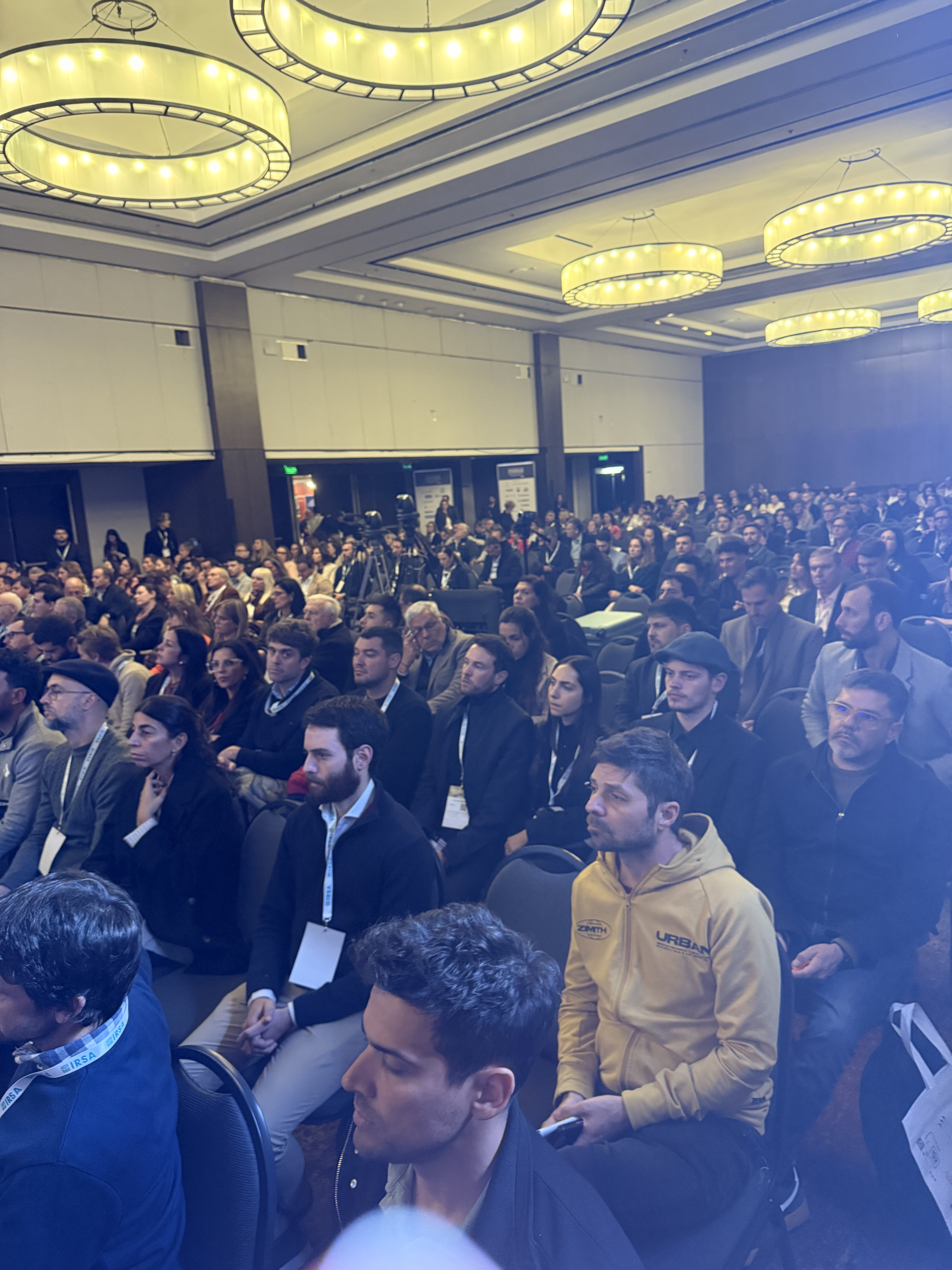
  • At our most recent event, we onboarded more than 700 real estate developers into blockchain tokenization.
  • We have delivered talks and workshops to over 2,000 companies, showcasing the potential of Ethereum for real-world use cases.
  • We serve as technical and legal advisors for multiple chambers and institutions, building bridges between blockchain and traditional business sectors.

COMMUNITY HUB PROGRAM: DRAFT OUTLINE

  • Panels & Roundtables: with banks, real estate chambers, notaries, regulators, and tokenization pioneers.
  • Workshops: hands-on sessions on legal-tech interoperability, token standards, and compliance design.
  • Case Studies: tokenized mortgages, commodities, public debt, and infrastructure assets.
  • Networking & Collaboration: bridges between developers and institutions.
  • Educational Materials: accessible guides and visual roadmaps for both technical and non-technical audiences.

COMMUNITY HUB PROGRAM (DRAFT)
Monday, Nov 17 – Foundations of Tokenization

  • Morning Opening: What are RWAs? Global opportunities and local challenges.
  • Case Study Panel 1: Real Estate Tokenization – From Presales to Property Registries.
  • Afternoon Session: Mortgage Securitization & Blockchain as Lending Infrastructure.
  • Case Study Panel 2: Tokenized Housing Funds & Affordable Housing Models.

Tuesday, Nov 18 – Legal & Institutional Infrastructure

  • Morning Session: The Role of Notaries, Digital Identity, and Legal Signatures.
  • Case Study Panel 1: Digital Protocols & Blockchain for Public Registries.
  • Afternoon Session: Banking & Regulatory Roundtable.
  • Case Study Panel 2: Stablecoins & Tokenized Deposits in Traditional Finance.

Wednesday, Nov 19 – Expanding Use Cases & Ensuring Trust

  • Morning Session: Tokenization of Commodities, Bonds, and Sovereign Debt.
  • Case Study Panel 1: Agricultural Commodities & Export Financing.
  • Afternoon Session: Compliance and Transparency: AML/KYC frameworks.
  • Case Study Panel 2: Green Bonds & Sustainable Infrastructure Tokenization.

Thursday, Nov 20 – Building and Co-Creating

  • Morning Workshop: Builders’ Lab – Prototyping RWA Apps on Ethereum.
  • Case Study Panel 1: Tokenized Invoices, Supply Chain & Factoring Solutions.
  • Afternoon Sandbox: Law, Tech, and Finance Co-Design.
  • Case Study Panel 2: Interoperability Between Tokenization Platforms (ERC-721x, ERC-3643, etc.).

Friday, Nov 21 – Collective Reflection & Roadmap

  • Morning Session: Collective Synthesis – What Did We Learn?
  • Case Study Panel 1: Public-Private Partnerships: Cities, Infrastructure & Tokenization.
  • Afternoon Session: Building the Roadmap for RWA Adoption in LATAM.
  • Case Study Panel 2: Tokenized Investment Funds & Institutional Adoption.

Core Organizers

ROLO VIGLIANO
Co-founder of Pala Blockchain with 25+ years in IT and telecom (Siemens, Nortel, Ciena). Certified blockchain expert, MBA, and Harvard Business School alumni. Provides strategic vision for enterprise blockchain adoption.

DIEGO NUNES
Lawyer & Partner at Estudio Nunes & Asoc., Corporate Legal Advisor on Cryptocurrencies. With nearly 20 years of legal practice, he specializes in corporate, preventive and high-tech law, combining deep expertise in cryptoassets regulation, compliance, and business structuring.

He is a member of the German Desk work group at the Argentine-German Chamber of Commerce (AHK), Secretary at CADMIRA, and active member of the Argentinean Legal Community of Impact Economy (CLAI). Holds a Diploma in Environmental Law (Universidad Austral, Argentina).

Beyond corporate advisory, Diego leads CSR initiatives, collaborates with NGOs such as Plato Lleno and Agenda Ambiental, and heads the Circular Economy program at RAAEs. Recognized for his international outlook and negotiation strategies, he is committed to creating value for clients, promoting sustainable business models, and driving blockchain-based legal innovation.
LinkedIn: https://www.linkedin.com/in/diego-nunes/

PAULA VIGLIANO
Co-founder of Pala Blockchain with 15+ years in corporate finance and operations (Telecom, American Express). Led the onboarding of 700+ real estate developers and trained 2,000+ companies on blockchain adoption. Harvard Business School certified in Leadership Excellence.
Linkedin: https://www.linkedin.com/in/paula-vigliano/

GONZALO SPOSATO
CFO and Business Development Director at Pala Blockchain with 20+ years in finance (Ciena, Avaya, Nortel). Specialist in real estate tokenization, member of the Argentine Real Estate Executive Club (CERA), with postgraduate studies in Crypto & DeFi (UCEMA).
Linkedin: https://www.linkedin.com/in/gonzalosposato/

Invited Stakeholders

  • Tokenization pioneers (Argentina).
  • Banking chambers and fintech associations.
  • Notary associations and bar associations (e.g., Colegio de Escribanos).
  • Real estate developer chambers and industry entrepreneurs.
  • Regulators and policymakers, engaging directly with builders.
  • Other tokenization projects and platforms, to encourage interoperability.

Why this team

  • Proven ability to bring multiple worlds together: legal, financial, business, and technical.
  • Advisors to multiple chambers and institutions, with ongoing collaborations that position us as a trusted, neutral reference.

Neutrality
The RWA Hub will remain strictly educational and neutral, without promotion of tokens or specific projects. It will be a collaborative environment open to all stakeholders.

Languages
Sessions will be in English and Spanish, ensuring accessibility for both international participants and the local Latin American community.

WHERE BLOCKCHAIN MEETS THE REAL ECONOMY
The RWA Community Hub will be the space where blockchain meets the real economy. By convening tokenizers, banks, notaries, chambers of commerce, regulators, and developers, it will create a neutral and inclusive arena for education and co-creation.

With a proven record of onboarding hundreds of developers, engaging thousands of companies, and advising institutions across industries, the organizers bring both expertise and convening power. Together with our ecosystem of innovation partners, we will ensure that Ethereum becomes the infrastructure for transparent, compliant, and inclusive tokenization.

BUILDING TRUST THROUGH INSTITUTIONAL DIALOGUE

OUR PARTICIPATIONS AND INSTITUTIONAL ENGAGEMENTS

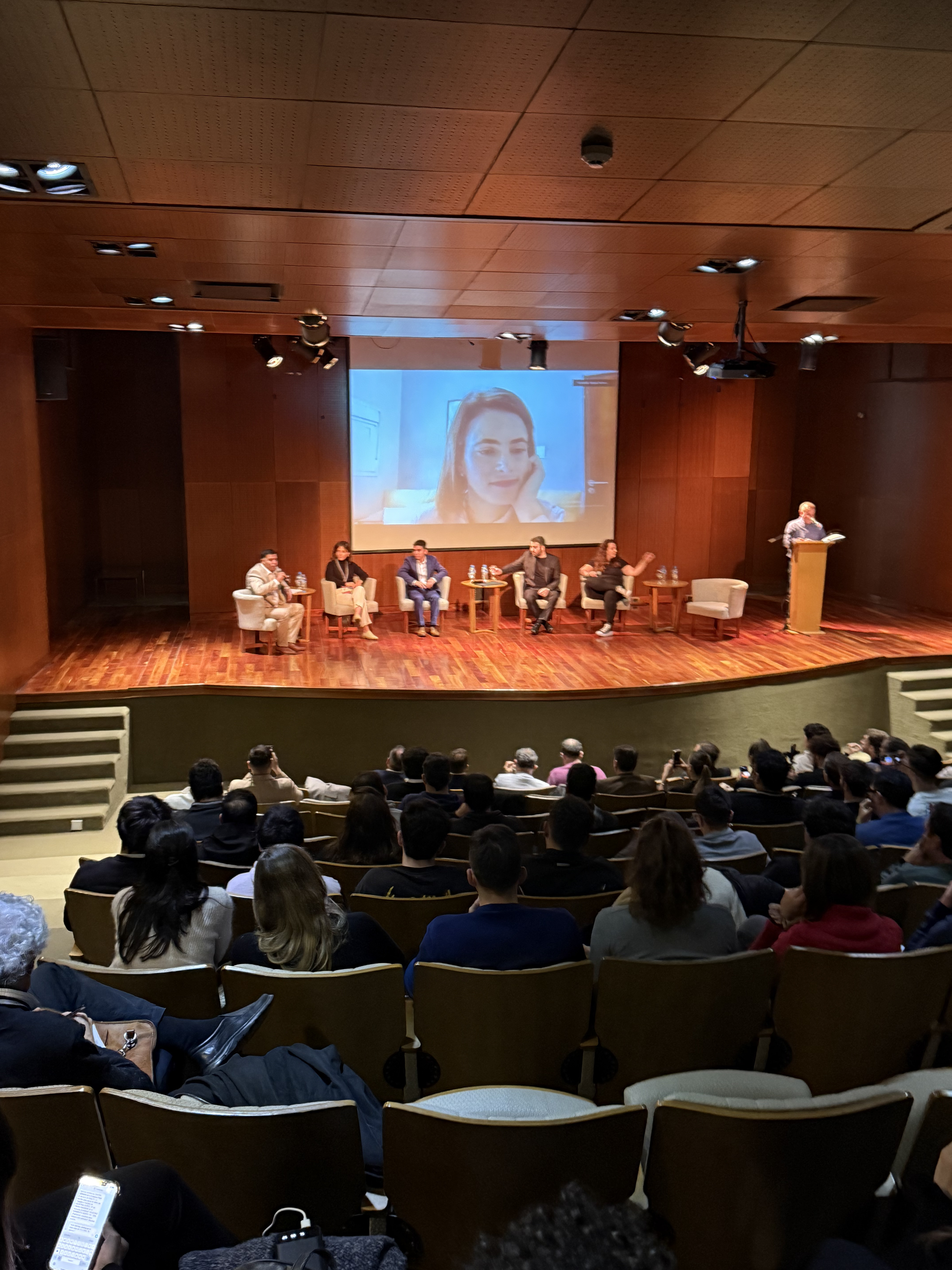
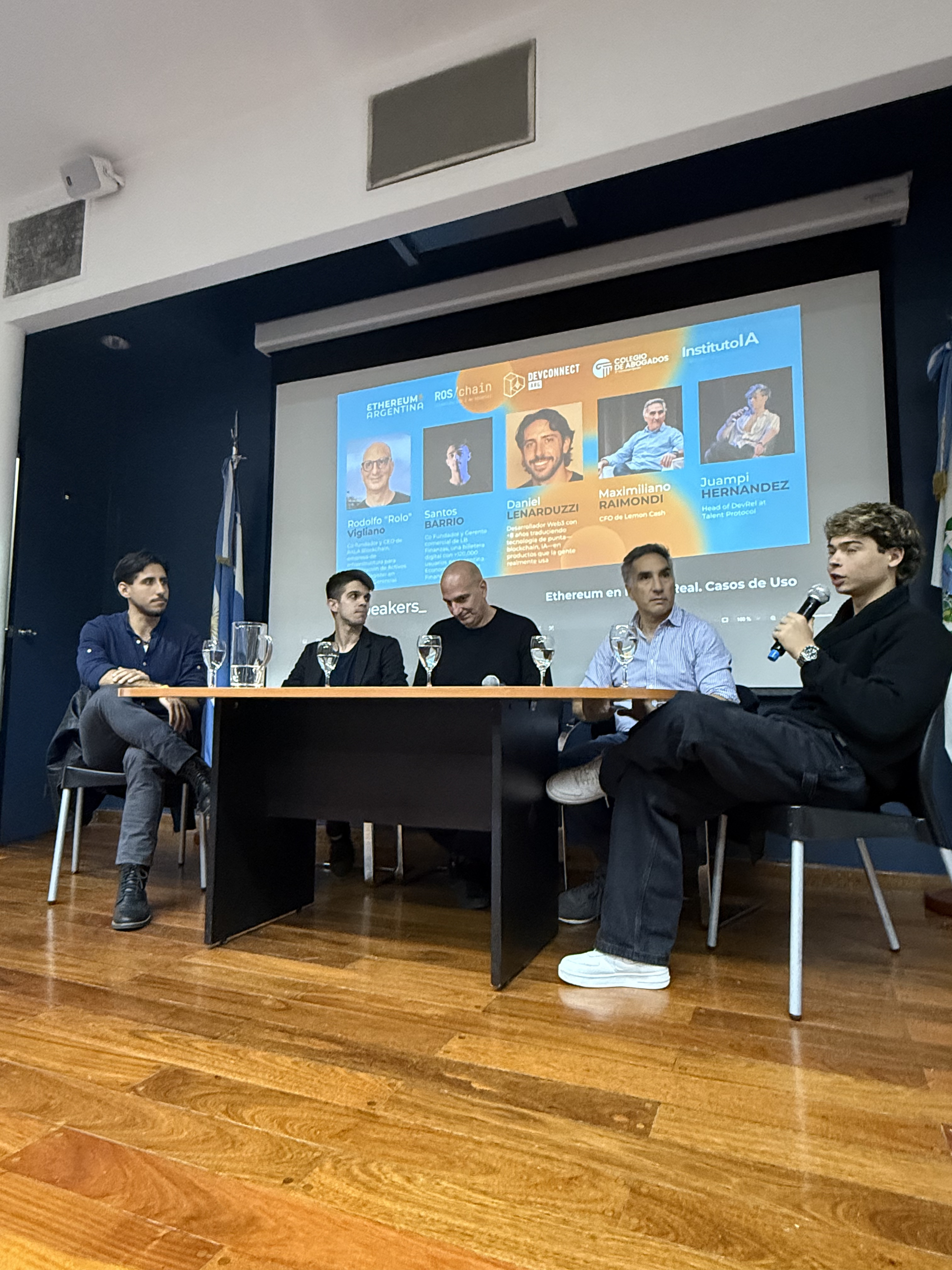
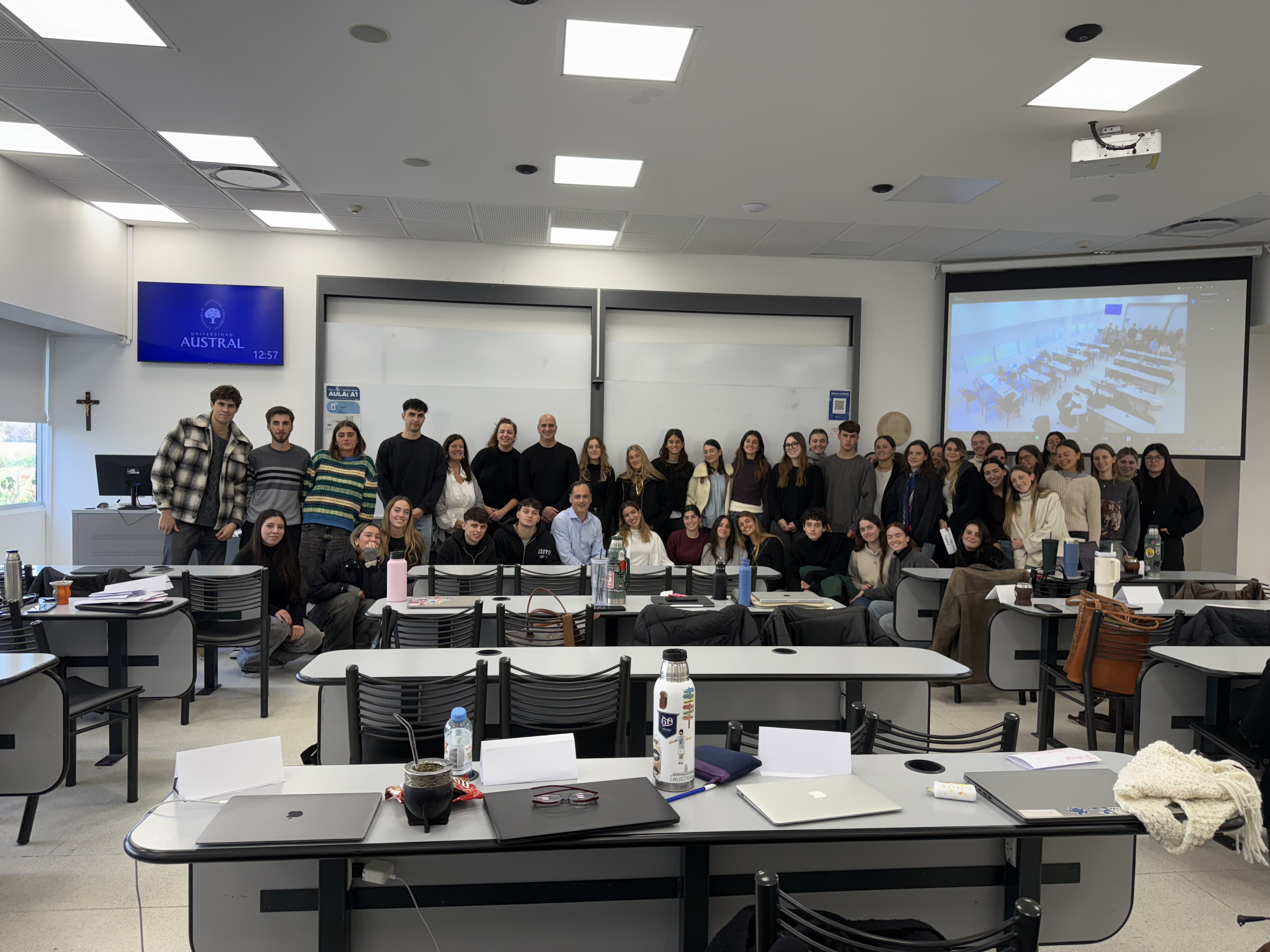
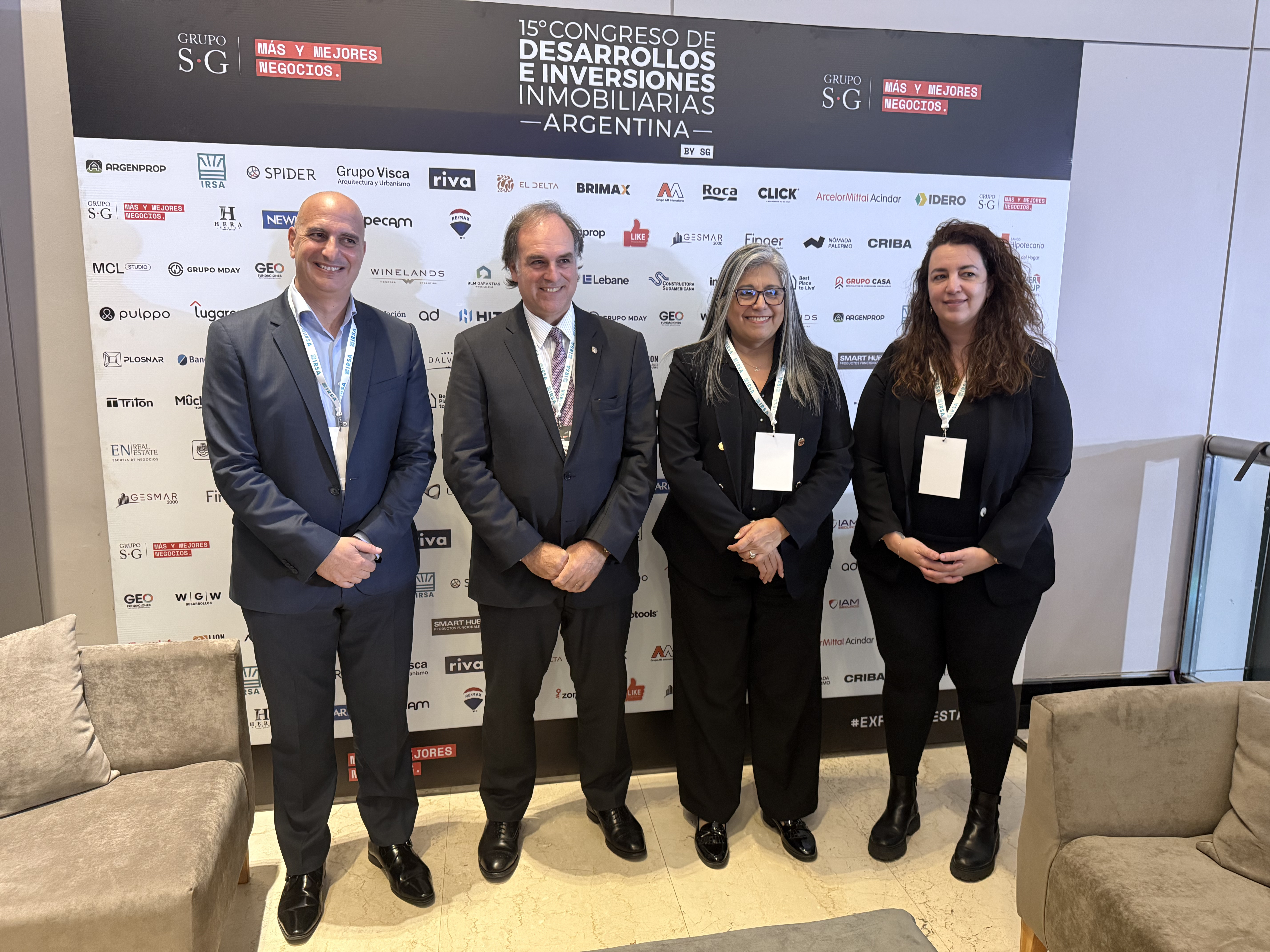
We have already engaged in high-level dialogues with key institutions in Argentina, including the National Securities Commission (CNV), the Colegio de Escribanos, and academic forums such as Universidad Austral. We have also participated in innovation panels hosted by the Province of San Juan, fostering conversations between government, business leaders, and the blockchain community.

These experiences demonstrate our ability to bridge Ethereum’s technology with regulators, legal experts, and traditional industries, ensuring that the RWA Hub will provide Devcon attendees with a space grounded in real-world relevance and institutional legitimacy.

https://www.instagram.com/p/C-iIT-yB_Pt/

https://www.instagram.com/p/DNM1jbPhxD8/

https://www.instagram.com/p/DMqxZThI6MQ/?img_index=1

https://www.instagram.com/p/DLKxT6jC39I/

https://www.instagram.com/p/DKChOpzIWOo/
Technical Requirements – Exhibition Stand Setup for the RWA Hub

Concept
An open “mini-auditorium” space with bleacher seating for 25 people and a front area for 2–3 speakers/moderators, designed for talks, panels, and dynamic dialogues.

1. Structure & Layout

  • Recommended area: 6m x 4m (24 m²)
  • Modular bleachers: 25 seats (3–4 levels)
  • Low platform (15–20 cm) for moderators/speakers
  • Open front space for circulation and possible camera setup

2. Furniture

  • 25 bleacher seats
  • 2–3 armchairs + 1 small side table
  • Optional: 3–4 folding chairs for additional panelists

3. Sound

  • Basic sound system and microphones as provided by the fair, with technical support

4. Lighting

  • 2–3 warm LED spotlights for the speakers’ area
  • General support lighting for bleachers
  • Optional: decorative LED strips to reinforce branding

5. Collaboration Tools

  • Whiteboard or flip chart
  • Post-its, markers, and co-creation kits
  • LED screen or TV in the speakers’ area

6. Branding & Atmosphere

  • Branded backdrop behind speakers
  • Side vinyls/banners with logos/sponsors
  • Decorative plants and carpet for warmth and acoustics

7. Infrastructure

  • 3–4 power points + surge-protected strip
  • WiFi access (if live streaming)
  • Small side area for laptop/console if required

8. Optional Services

  • Fixed camera on tripod for recording/streaming
  • Streaming with operator for broader reach
  • Water/coffee station for speakers and guests

Note
We remain flexible and will adapt to what the event organizers consider most appropriate for the space.

8 Likes

I’d like to suggest some real case interaction with the advisors. “How to overcome your legal team saying ‘NO’ to everything”. Also some insights about those conversations and real experiences in creating a viable and legally compliant RWA tokenization project

2 Likes

How do we imagine tokenization will impact our daily lives over the next 5 years? Will it be possible to tokenize not only real estate but also company shares, bonds??

2 Likes

Notary intervention as a key role for the acceleration of the certification process of the impact of companies in their function of verifying the RWA

2 Likes

Hi, here is a tricky question. Why the regulation is so strict for “user protection” with crypto/real estate/innovation projects” and in the other hand we have publicity for bets everywhere… and we have state bonds (like the one of La Rioja this week) or ONs (Celulosa, Albanese, Grobo, etc.) or ALYCS (like GYT) that default all the time making the investors loose their money despite being heavily regulated.

2 Likes

Congratulations @Paula_Vigliano and the entire Pala Blockchain team, a true Argentine pride! All the panels were very interesting!

I really like all the topics, but thinking about the general audience attending, I believe the Day 1 section on RWA fundamentals should be extended. Most of the people who will attend Devcom want to learn about the technology and the basic aspects of the tokenization process. For example, the Tuesday/Wednesday sessions seem more geared toward a specific audience that already has advanced knowledge—so on those days a lot of people might end up filtering out.

Another idea would be to start each day with a more basic and general topic, and then finish with something more specific.

For example: on Wednesday you could start by talking about farmland tokenization and then connect it with the rest. On Tuesday you could start with the topic of tokenizing documentation/records (an introductory/basic theme) and then continue with the other subjects of the day. This way, every day would include broader/basic topics that ensure strong general attendance. Maybe tweaking the titles of each day could help too :wink:

As an extra idea, if you want to add some gamification or rewards for participation, you could display a QR code after each talk where an NFT can be minted. At the end of the week, you could give out different prizes depending on the number of talks they attended (each NFT could represent part of the Pala Token logo). For example, attending all sessions could earn a plush toy, while attending three could earn something else. This would add a fun extra element to the talks.

It will surely be an excellent panel!! Congratulations again!

1 Like
  • What would be the minimal legal wrapper in Argentina (following the general resolutions, I think it was number one-thousand-something) so that the tokenized element also implies a transfer of title? My understanding is that right now it’s just an assignment of credit, not “ownership”, so to speak. How would you handle liens and foreclosures both on- and off-chain?
  • If we used ZK tech, which proofs would be considered “sufficient” for sanctions and suitability? For instance, is a proof that says “I’m not on list X” enough? Is selective disclosure being discussed with regulators in Argentina?
  • On tokenized treasuries (used as corporate treasury), what would the local frictions be? Say you hold cash + stables in treasury and want to replace part of it with tokenized T-Bills (for collateral, yield, whatever).
  • What metrics should be reported when you want to demonstrate “liquidity” in a compliant way?
  • For several corporate processes you need to certify events (with notaries, say, or paying agents), but with the tokenized on-chain part, how/who would audit holder snapshots? Is there anything similar to the EU’s DSS? Would you use oracles or oracle networks? How can we ensure that this certification and audit are sufficiently decentralized (or is that not relevant for these cases)?
  • In notary flows, how would interoperability work between on-chain signatures and a qualified digital signature? For example, could a notaries’ association issue some kind of attestation that’s reusable in a KYC flow?
  • Could we move from annual audits to continuous auditing? Would a regulator or a bank accept that?
  • What’s the regulatory roadmap for 2026? With the local RG (scope, limits, sandboxing), is there an intent to align with MiCA? Are we going to see cross-listings or things like transfers of liquidity between regions/zones?
  • Speculating a bit: do you think Argentina, looking ahead with the RG we have, could become the LATAM case study globally on regulation? I picture international liquidity for Argentine issuers if regulatory frameworks across regions can be aligned.
1 Like

We are also excited to announce that more participants from across the ecosystem have joined as co-organizers of the space, including:

  • Cande Font (R3al Blocks)
  • Ezequiel Gorbatik (Zerem Finance)
  • Ignacio del Castillo (Raiz)
  • Mauro Argarañaz (Raiz)
  • Tomi Bresler (BoulderTech)

In the coming days, we’ll be sharing many exciting updates.

New proposal with all organizers:

DevConn

:bookmark_tabs: RWA Community Hub

1. Introducción

El RWA Community Hub será un espacio dedicado a explorar cómo los activos del mundo real (RWA) pueden tokenizarse de manera responsable en Ethereum. El Hub fomentará el diálogo, la educación y la colaboración interdisciplinaria, asegurando que la tokenización evolucione de forma transparente, regulada e inclusiva, conectando a Ethereum con la economía real.

El programa está diseñado para que todos los días se activen las 5 dimensiones del Hub: las 4 conceptuales más la dimensión práctica de las Activaciones.


2. Dimensiones

El Hub se organiza en 4 dimensiones centrales que estructuran el contenido y las conversaciones:

  • Adopción RWA – Casos de uso, narrativas, inclusión y comunidades.
  • Tecnología RWA – Estándares en Ethereum, interoperabilidad y builders.
  • Economía & Finanzas RWA – Modelos de negocio y adopción de mercado.
  • Instituciones & Regulación RWA – Notarios, bancos, cámaras y reguladores.
  • Activaciones – workshops, paneles y gamificación.

3. Activaciones

Las dimensiones se traducen en actividades concretas a través de:

  • Paneles & mesas redondas.
  • Workshops prácticos.
  • Casos de uso sectoriales.
  • Espacios de networking & colaboración.
  • Materiales educativos accesibles.
  • Gamificación.

4. Co-organizadores

(Ejemplo inicial, se pueden agregar más instituciones y logos en Notion)

  • Boulder Tech
  • Colegio de Abogados de CABA - departamento de Innovación
  • Colegio Escribanos CABA - departamento de Innovación
  • Pala Blockchain
  • Raíz
  • R3al Blocks
  • Super Pioneros
  • Zerem Finance

Nombre persona Empresa LinkedIn BIO
Cande Font (referente) R3al blocks
Pau Vigliano (referente) Pala blockchain
Rolo Vigliano Pala blockchain
Gonzalo Sposato Pala blockchain
Diego Nunes Estudio Nunes
Ezequiel Gorbatik Zerem Finance https://www.linkedin.com/in/ezequielgorbatik/
Ignacio del Castillo (referente) Raiz
Mauro Argarañaz Raiz

5. Speakers (borrador inicial)

Tabla de speakers confirmados

Nombre Rol Institución LinkedIn Fecha Invitado por Dimensiones Tema
Rodolfo Vigliano Cofundador Pala Blockchain Perfil
Débora Carrizo CEO - cofounder R3al Blocks
Candelaria Font CMO R3al Blocks
Rocío Ferreiro CTO R3al Blocks
Paula Vigliano COO Pala Blockchain Tecnología ERC-20 y ERC-3643, el pasado de la tokenización.
Ezequiel Gorbatik CEO - cofounder Zerem Finance Tecnología Casos de uso de Real Estate en la Blockchian, Pagos, Tokenizacion, Prestamos Colateralizados
Giberto Santamaría Estudios Santamaría abogados R3al Blocks Legal tech

Speakers invitados (en proceso de confirmación)

  • Bancos y fintechs
  • Reguladores y policymakers
  • Pioneros en tokenización de Argentina y LATAM
  • Creadores de contenido
Nombre Rol Institución LinkedIn Fecha Invitado por
Rodolfo Vigliano Cofundador Pala Blockchain Perfil
Nestor kreimer Criptokuantica R3al Blocks
Santiago Roncorini Win investment R3al Blocks
Diego Diaz Head of crypto Cámara Argentina Fintech R3al Blocks
Matías Simone CEO Landtoken R3al Blocks

Cronograma tentativo

Lunes

  • Intro: ¿Qué son los RWAs y qué está pasando en Argentina?
  • Panel: Real Estate, bancos y reguladores frente a la tokenización.
  • Caso de uso: Yerba mate tokenizada: tradición que se vuelve inversión.
  • Taller práctico: Tokenización para todos (cómo invertir desde USD 100).
  • Dinámica: Pitch your RWA (startups presentan ideas en 5 min).
  • Networking: Mate & Networking con música local.

Martes

  • Panel: Energía solar y eólica, financiamiento colectivo de proyectos verdes.
  • Conversación: Notarios, identidad digital y firmas electrónicas.
  • Caso de uso: Real Estate tokenizado: nuevas formas de financiar proyectos.
  • Workshop: Community builders, cómo llevar la tokenización a la vida real.
  • RWA Dev Studio: Prototipado hands-on para developers.
  • After: Rondas de conexión creativa.

Miércoles

  • Panel: Diversidad de activos: real estate, agro y commodities.
  • Roundtable: Bancos, cámaras inmobiliarias y reguladores.
  • Caso de uso: Deportes & espectáculos (tickets y membresías tokenizadas).
  • Dinámica: Juegos y simulaciones para explicar tokenización sin jerga.
  • Mini-hackathon: desafío de smart contracts en Ethereum.
  • Networking: Token pitch + comunidad.

Jueves

  • Panel: Inversión institucional y público-privada.
  • Caso de uso: Energía y nuevos commodities digitales.
  • Workshop: Interoperabilidad de estándares en RWA.
  • Historias: Comunidades que participan de su propia economía.
  • Sandbox: co-diseño entre abogados, developers y empresas.
  • After: Música, comunidad y dinámicas de cierre parcial.

Viernes

  • Sesión colectiva: aprendizajes y próximos pasos de la semana.
  • Panel: Futuro de la tokenización en LATAM y mercados de capitales.
  • Caso de uso: Real Estate + deportes & espectáculos.
  • Taller práctico: cómo tokenizar un pequeño proyecto.
  • RWA Dev Studio: demo de prototipos creados en la semana.
  • Cierre participativo: hoja de ruta compartida + after con comunidad.

Hello @Paula_Vigliano and co-organizers,

Thank you for applying to organize a Community Hub for Devconnect ARG! Your proposal has now entered the voting phase.

In the coming days, the Devconnect team will review all submissions and select the ones that best reflect the spirit of the first Ethereum World’s Fair. Selected proposals will be announced during the week of September 8. After that, we’ll move into a collaborative phase to refine each Hub’s concept, programming, and production needs.

We appreciate your contribution to shaping the first Ethereum World’s Fair.

Hi @Paula_Vigliano and RWA Hub Community,

Thank you for submitting your proposal for Community Hubs. As mentioned in our announcement post, your proposal has been selected to be part of the first Ethereum World’s Fair! Kudos :tada:

Your submission stood out for its diverse, collaborative approach and unique programming. We can’t wait to see your ideas come to life at Devconnect, and we’re here to support you along the way. As part of the selection process, I’ll be reaching out to coordinate a preparation sync, support new collaborations, share programming deadlines, and define production needs.

Congratulations once again, and thank you for your contributions to the first Ethereum World’s Fair!

With gratitude,
Ornella & the Devconnect team